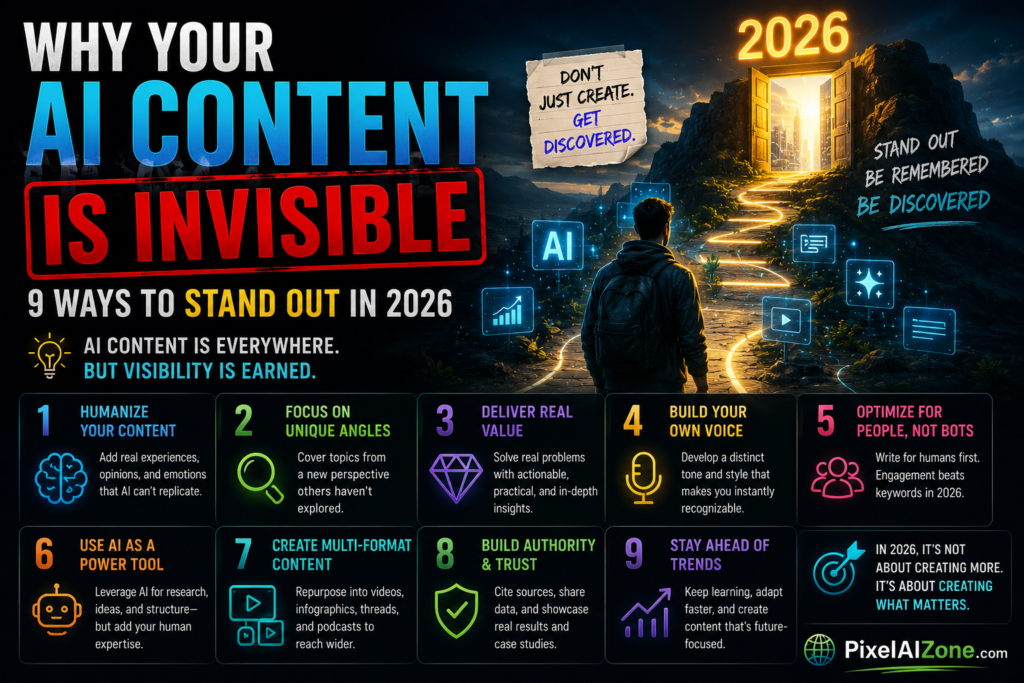
Why your AI content is invisible is a question every content creator needs to ask in 2026.
Let me show you something.
I was running a citation audit for a client last month, watching Perplexity process a query about travel credit cards. It synthesized an answer from six sources. None of them were the client’s site .
When I asked why, the pattern was obvious: his article was a generic list — the exact same information available on every bank website, every comparison portal, every affiliate blog .
The AI didn’t ignore him because his SEO was bad. It ignored him because his content had zero rarity value. In a world where generative content costs almost nothing to produce, generic content has a value of exactly zero .
This guide answers why your AI content is invisible and gives you 9 ways to fix it.
Why your AI content is invisible comes down to one thing: it’s not rare enough.
Table of Contents
- The Real Problem: Why Generic Content Fails
- How AI Systems Actually Choose What to Cite
- 9 Ways to Stand Out in 2026
- The “Rarity Principle”: Why Cost Creates Value
- How to Structure Content for AI Extraction
- Why Traditional SEO Still Matters (More Than Ever)
- FAQ
Why Your AI Content Is Invisible: The Real Problem
Why your AI content is invisible is a question that every creator needs to ask.
AI has made publishing faster and easier than ever. And the result? Saturation .
Because AI models train on vast amounts of existing material, they reproduce familiar patterns: similar phrasing, predictable structures, and safe conclusions. On their own, these outputs read as competent and coherent. In aggregate, they become indistinguishable .
The biggest issue with AI-generated content isn’t accuracy — it’s sameness.
When every result looks and sounds the same, differentiation matters. A fresh take is no longer a competitive advantage in itself. What separates one result from another is voice, perspective, and lived experience .
The “Zero-Value Problem”
The golden rule of Generative Engine Optimization (GEO): If your content costs nothing to produce, it is worth nothing .
Generative engines prioritize content that directly answers complex, urgent queries with firsthand experience. The mechanism is simple: when someone is in a crisis, they follow your guide. When it works, they bookmark it, share it, and return to it. The engine tracks those engagement signals and high-quality backlinks, and your visibility compounds .
Example: Writing a generic list of “Top Credit Card Offers” by scraping bank websites is useless. AI already has that data. It won’t cite you because your domain authority can’t compete with the banks themselves, and you’re not saying anything they can’t say .
But writing this: “Stranded in Japan with no cash? Here’s the exact step-by-step guide to withdrawing money using X credit card at 7-Eleven ATMs, including which buttons to press when the menu is only in Japanese, and the specific error message to ignore.”
That’s crisis-averting content. It requires a tangible human cost to produce. You cannot automate genuine experience. You need to physically go to Japan, test the ATM, take the photos, fail once, succeed once, and document the exact path .
If you’re using AI to spin existing articles without investing in production costs or technical architecture, you’re not building an asset. You’re building landfill .
Why your AI content is invisible often comes down to a lack of firsthand experience.
How AI Systems Actually Choose What to Cite
Understanding why your AI content is invisible starts with how AI systems choose sources.

AI systems like ChatGPT, Perplexity, and Google AI Overviews don’t work like traditional search engines. They don’t rank pages. They synthesize information from multiple sources .
How AI Overviews Work
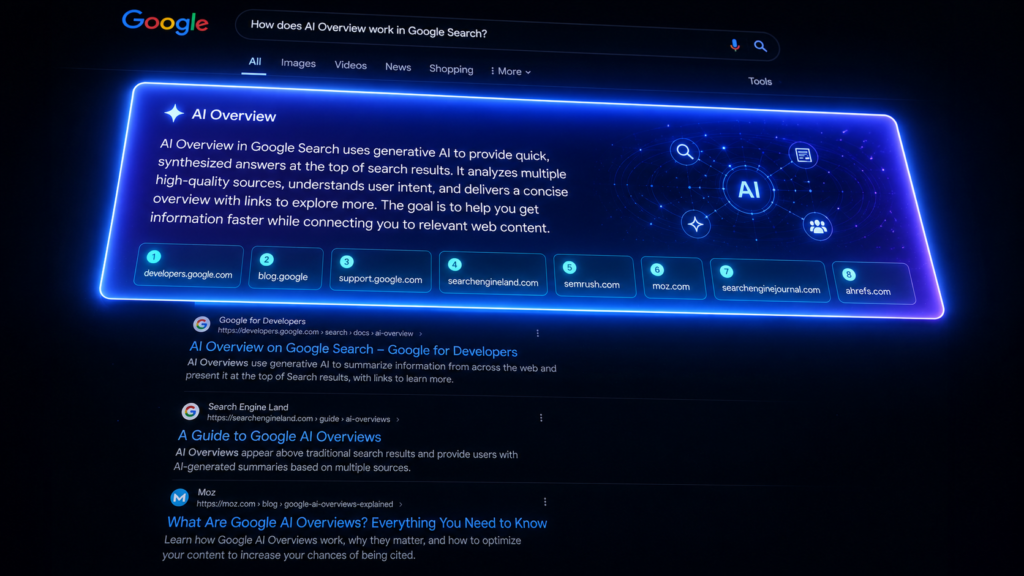
Google’s AI Overviews use a process called “query fan-out.” Instead of treating your search as a single query, Gemini breaks it into multiple related sub-queries, runs them in parallel, then stitches the best information into one answer .
The system evaluates three main signals when picking sources:
| Signal | What It Means |
|---|---|
| Content quality | How accurate, original, and useful the page is |
| Source authority | How trusted the domain and author are on the topic |
| Relevance | How directly the content answers the specific sub-query |
If your page wins on those signals for any of the sub-queries inside a fan-out, you have a shot at being cited .
The Citation Ecosystem Is Fragmented
Meltwater’s April 2026 analysis of approximately 5.35 million citations across eight major LLMs revealed that AI platforms do not behave like a single universal search layer. Instead, they act like distinct information tribes, each with its own trust hierarchy .
| Model | Citation Behavior |
|---|---|
| ChatGPT | Institutional authority engine — earns 51.1% from news/earned media |
| Grok | Social-first — 15.1% citations from social platforms |
| Perplexity | Video-led — YouTube is #1 source |
| Google AI Overviews | 11.9% social citations; relies heavily on Reddit and YouTube |
| Claude | Prioritizes structured data and corporate websites |
This means a brand can be highly visible in one AI platform and nearly invisible in another .
The answer to why your AI content is invisible often lies in structure.
Why your AI content is invisible can be fixed by improving content structure and clarity.
Why your AI content is invisible can be fixed with firsthand experience.
9 Ways to Stand Out in 2026
1. Audit Your AI Visibility

You can’t plug holes in AI search without knowing where they are .
What to do:
- Create a list of 20–30 buyer questions without brand mentions
- Run each prompt across ChatGPT, Gemini, Perplexity, and Google’s AI Overviews
- Score each response across:
There’s a massive difference between “Brand X is the industry leader” and “Brand X is an option, though users frequently report challenging onboarding.” The first does the promotion for you, while the second may put off a lead .
2. Create Content for Middle and Bottom of Funnel Queries
Top-of-funnel (ToFu) content like “What is logistics?” is increasingly dead for traffic generation. AI can answer these generic questions directly, so there’s no need to cite you .
The highest-leverage content now lives in the middle and bottom of the funnel. This includes:
This is where AI might need to actually cite a source or provide recommendations instead of just crunching its training data .
What to do:
Map your product’s value propositions to specific “how to” and comparison queries your buyers ask during evaluation. Then, create comprehensive guides that naturally answer multiple related sub-questions within a single piece .
3. Write the Direct Answer First
LLMs scan for sentences that answer the query cleanly. A page that buries the answer under three intro paragraphs loses to a page that opens with the definition .
What to do:
Structure each section like this:
- Sentence 1: Direct answer to the heading question
- Sentence 2-4: Supporting context, numbers, or proof
- Rest: Examples, nuance, edge cases
If your H2 is “What is conversion rate optimization?”, the first sentence under it should be “Conversion rate optimization is…”
4. Demonstrate Real Expertise (E-E-A-T)
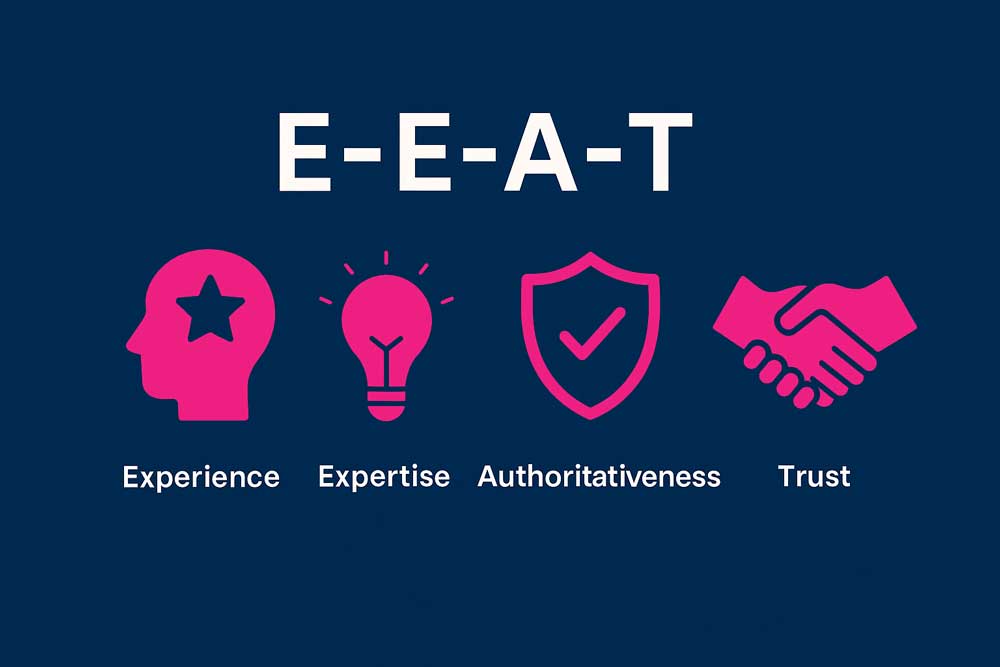
Google’s quality systems prioritize content with experience, expertise, authoritativeness, and trustworthiness. AI Overviews lean on the same signals .
What helps:
- Original data, surveys, or research only you can publish
- Named authors with credentials and bios linking to their work elsewhere
- Citations to primary sources (academic papers, government data, original studies)
- Updated publish dates with substantive changes, not just date stamps
What hurts:
- AI-generated filler with no original insight
- Anonymous author bylines
- Pages that paraphrase other articles without adding anything
5. Format Content for AI Extraction
Why your AI content is invisible is also about formatting for AI extraction.

LLMs prefer content they can lift cleanly. Help them .
What to do:
- Break complex topics into bulleted or numbered lists
- Use comparison tables for “X vs Y” queries
- Add a clear FAQ section using question-based H3s
- Keep paragraphs to 3-4 sentences max
- Bold the key term when you define it
6. Build Brand Mentions, Not Just Backlinks

For traditional SEO, backlinks have always been the dominant off-page signal. For AI Overviews, unlinked brand mentions appear to matter more .
Gemini reads the wider web and notices which brands get talked about in the context of which topics .
Ways to earn mentions:
- Publish original research that journalists cite
- Respond to journalist requests on platforms like HARO, Qwoted, and Featured
- Get featured in industry roundups and “best of” lists
- Partner with complementary brands on joint content
7. Leverage Earned Media

Earned media remains central to AI citation behavior. In April 2026, Earned/News accounted for 39.5% of all citations across major LLMs, up from 38.3% in March .
For PR teams, this is a strong signal: media coverage is becoming essential fuel for AI visibility .
A blog post alone may not be enough anymore, because to be cited by AI, brand narratives increasingly need reinforcement from news coverage, social discussion, video transcripts, Wikipedia, data aggregators, and trusted third-party sources .
8. Build Video Content for AI Readability

YouTube appears in the top five cited sources for six of the eight models analyzed, and is the number one source for Perplexity, Gemini, Google AI Overviews, and Google AI Mode .
What to do:
- Prioritize clear titles
- Use structured descriptions
- Include accurate transcripts
- Create educational formats
The transcript is often the AI-readable asset .
9. Use AI as an Accelerator, Not a Substitute

AI is most effective when it accelerates tasks that don’t require decision-making. Drafting outlines, summarizing research, or generating alternative phrasing can save time. Choosing the angle, defining the message, and interpreting results remain human responsibilities .
A healthy AI-assisted workflow includes:
When AI is used as a support tool rather than a substitute, content remains intentional and aligned with business goals .
The 4-Step GEO Prompting Framework:
| Principle | The Lazy (SEO) Approach | The Optimized (GEO) Approach |
|---|---|---|
| Role | “Write a marketing post.” | “Act as a senior social media strategist with 10 years in B2B fintech. Write a post for this product.” |
| Context | “Introduce this phone.” | “Target young professionals aged 25-35 who are anxious about data privacy. Keep it under 500 words. Tone: professional yet relaxed. Avoid hype words like ‘revolutionary.'” |
| Format | “List 5 key points.” | “Use bullet points. Structure the post into three sections: ‘The Hidden Risk’, ‘The Specific Solution’, and ‘The Data Evidence’. Include one contrarian take.” |
| Refinement | “Looks good, thanks.” | “Act as a highly critical reader who works in compliance. Point out three factual blind spots or overstated claims in this draft, then rewrite them with conservative language.” |
The difference between the lazy approach and the optimized approach isn’t more prompting. It’s structured intent . The lazy approach treats AI like a vending machine. The optimized approach treats it like a junior team member who needs clear briefs, constraints, and critical feedback to produce work that won’t embarrass you .
The “Rarity Principle”: Why Cost Creates Value
The content that survives the AI era won’t be the content that was produced fastest. It will be the content that cost something to create .
Unique content requires a tangible cost:
- The crisis solved
- The firsthand test conducted
- The contrarian judgment that broke from consensus
Everything else is just digital compost .
What This Means for You
| Instead of… | Do This… |
|---|---|
| Generic “Top 10” lists | Crisis-solving, firsthand-experience content |
| Scraping competitor content | Conducting original research and surveys |
| Publishing more volume | Publishing deeper, more specific content |
| Relying only on AI | Combining AI with human expertise |
How to Structure Content for AI Extraction

According to LinkedIn AI visibility experts, the key to AI citation is structure :
What you need:
- Direct answers in 40-60 words
- Definitions that are the same everywhere
- Clean summaries so bots can pick them up
Why it matters: If AI can’t cite your content, it won’t. Make your answers clear, consistent, and extractable. AI systems decide whether your brand gets visible and trusted in AI answers, shaping revenue before clicks even happen .
The shift: Ranking is visibility. AI citation is influence .
Why Traditional SEO Still Matters (More Than Ever)
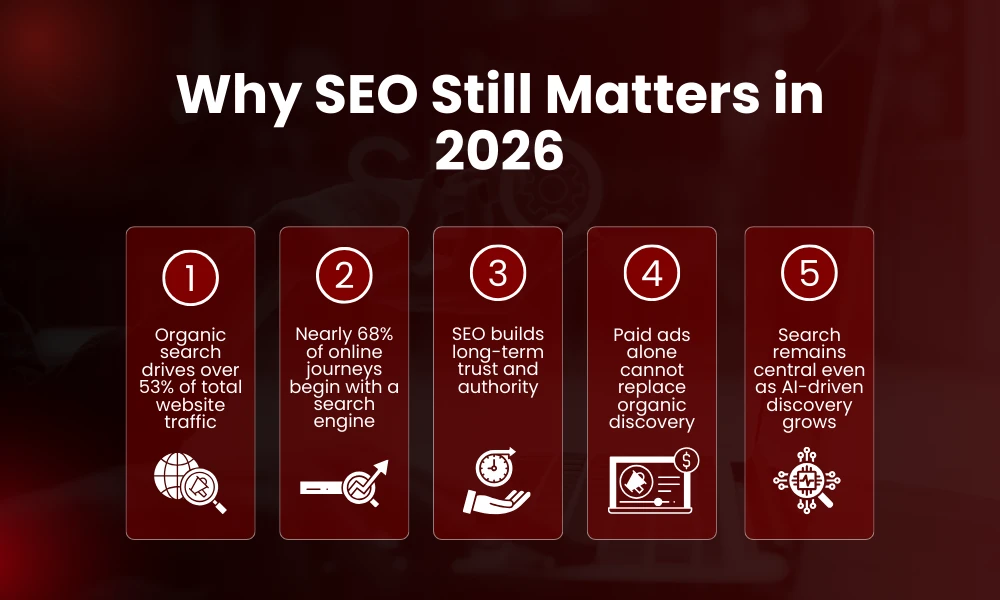
Despite the evolution of content creation tools, the way people use search engines has remained remarkably consistent. Users still arrive with a problem to solve, scan results, and choose the option that feels most relevant to them .
That behavior hasn’t changed because AI exists.
Page titles, headings, and meta descriptions continue to act as the first point of contact between a piece of content and its audience. In search results, they function less like technical fields and more like ad copy .
Small SEO Changes Can Lead to a Strong Impact
A recent experiment on a service website tested whether more descriptive, intent-aligned page titles would improve clicks .
Result: One page shifted from a generic service title to a more descriptive version focused on optimization and lead generation. The result was a 247% increase in clicks on that page alone .
Across multiple service pages, the average position didn’t improve on every page, but several key services moved closer to the top of the results while earning more clicks and impressions .
The takeaway is simple: When content aligns more closely with human intent, performance follows .
Classic SEO principles are still key:
- Clear alignment with search intent
- Descriptive, specific language
- A logical structure that helps users scan
- Messaging that sets accurate expectations before the click
None of these concepts is new. What’s changed is their importance.
When search results are crowded with similar-looking pages, minor improvements in clarity can produce incremental gains .
FAQ
Q: Why is my AI content invisible?
A: Most AI content is invisible because it’s generic. AI models train on vast amounts of existing material, reproducing familiar patterns. If your content offers nothing unique, AI systems have no reason to cite it .
Q: What’s the difference between SEO and GEO?
A: Traditional SEO is about ranking on search engine results pages. GEO (Generative Engine Optimization) is about being cited by AI systems like ChatGPT, Perplexity, and Google AI Overviews. Both matter in 2026 .
Q: How can I check if my content appears in AI Overviews?
A: You can use SEO tools like Semrush, Ahrefs, or SE Ranking to monitor AI Overview appearances. In June 2026, Google began rolling out dedicated Search Generative AI performance reports inside Google Search Console .
Q: Does Google penalize AI-generated content?
A: Google doesn’t penalize content just because AI generated it. It penalizes low-quality content regardless of how it was created. The key is demonstrating E-E-A-T (Experience, Expertise, Authoritativeness, Trustworthiness) .
Q: Should I stop using AI for content creation?
A: No. Use AI as an accelerator, not a substitute. AI can help with research, outlines, and first drafts — but human judgment, expertise, and original insights are what make content valuable .
Q: How can I make my content more visible to AI?
A: Write direct answers first (40-60 words), use clear structure (lists, tables, FAQs), demonstrate real expertise, build brand mentions, and create content with genuine experience .
Q: Is earned media still important for AI visibility?
A: Yes. Meltwater’s April 2026 analysis found that Earned/News accounted for 39.5% of citations and grew month-over-month. PR remains one of the strongest levers for improving brand visibility in AI-generated answers .
Q: Why is my AI content invisible?
A: Why your AI content is invisible usually means it’s too generic.
Understanding why your AI content is invisible is the first step to fixing it.
Final Thoughts
The growing presence of AI has exposed a hard truth: much of what passes for fresh content was never truly differentiated. When similar ideas are repeated at scale, fundamentals like intent alignment, descriptive titles, thoughtful structure, and honest messaging become the strongest signals of quality .
The content that survives the AI era won’t be the content that was produced fastest. It will be the content that cost something to create .
What that means for you:
- Stop producing generic lists
- Start solving real problems
- Share firsthand experience
- Write direct, clear answers
- Build authority through earned media
- Use AI as an accelerator, not a replacement
The difference between winning and being invisible isn’t more content. It’s content that’s worth citing.
Now you know why your AI content is invisible — and how to fix it.
Now you know why your AI content is invisible — and you have the tools to fix it.
Related Posts on Pixelaizone
- “The $1.3 Billion AI Ad Market: What It Means for Your Business (Game-Changing Trends)”
- “The Dark Side of AI in Pakistan: 5 Critical Threats We’re Ignoring”
- “Pakistan’s $1 Billion AI Investment 2026: What It Means for You (Game-Changing Opportunities)”
- “AI-Powered Finance in 2026: How Pakistani Businesses Are Transforming Banking (Revolutionary Changes)”
- “AI in Climate Change 2026: Powerful Strategies for Disaster Management in Pakistan”
- “AI Agents in 2026: The Ultimate Guide to How Autonomous Systems Are Changing Work”
- “AI in Pakistan Education 2026: A Complete Guide to the Future of Learning (Amazing Transformation)”
- Hostinger Review 2026: Why This is the Best Hosting for Small Businesses & Beginners
- The Future of Work in 2026: How AI Is Reshaping Jobs, Skills, and Careers
- 2026 AI Trends for Small Businesses: What’s Actually Working Right Now
- AI Side Hustles 2026: 7 Easy Ways to Earn Extra Income with Artificial Intelligence
What’s your biggest challenge with AI content visibility? Drop a comment below!