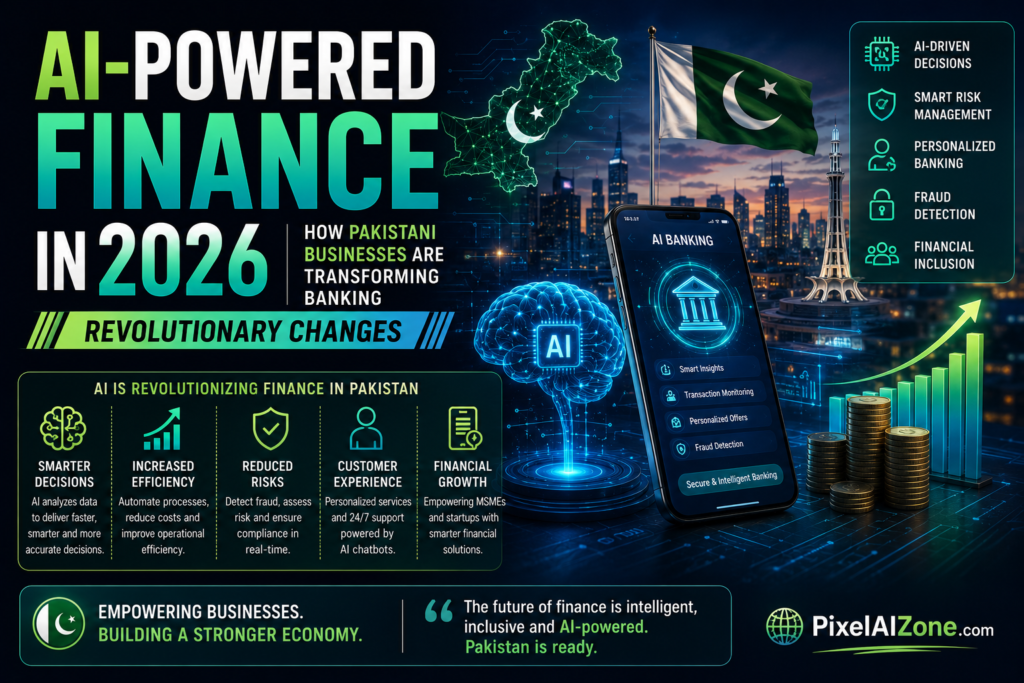
From AI-driven credit scoring to voice-activated banking — here’s how artificial intelligence is reshaping Pakistan’s financial landscape.
Let me show you something.
Pakistan’s financial sector is undergoing a transformation. What was once seen as a future capability is now becoming a practical tool for improving forecasting, budgeting, and reporting . With the government committing significant investment toward artificial intelligence by 2030, the momentum is reaching core business functions, including finance.
From the Bank of Punjab’s AI-powered credit scoring for farmers to BankIslami’s fully homegrown FOCUS platform, Pakistani businesses and financial institutions are embracing AI-powered finance in 2026 . This transformation is not just about technology — it’s about financial inclusion, efficiency, and economic growth.
Table of Contents
- The State of AI-Powered Finance in Pakistan (2026)
- How Pakistani Banks Are Using AI
- AI-Powered Credit Scoring and Lending
- AI in Fraud Detection and Cybersecurity
- AI for Corporate Finance: Forecasting and Cost Management
- Fintech Innovation and Buy Now Pay Later
- AI in Banking Customer Experience
- Challenges in AI Implementation
- The Future of AI-Powered Finance in Pakistan
- FAQ
The State of AI-Powered Finance in Pakistan (2026)
Pakistan is entering a pivotal phase in its digital evolution. For medium-sized enterprises operating in environments defined by tight cash flows, rising input costs, and increasing competitive pressure, AI offers a pathway to address these constraints .
Key developments in AI-powered finance:
According to industry practitioners, one of the most common challenges is not access to technology, but the way organizations approach its adoption. Many attempt to layer AI onto existing processes without first addressing underlying inefficiencies .
How Pakistani Banks Are Using AI
Bank of Punjab: AI-Powered SME Lending
The Bank of Punjab has emerged as a leader in Pakistan’s push for financial inclusion through AI-powered finance. In the past year, the bank had an outstanding book of approximately PKR 168 billion ($589 million) in MSME loans .
By adopting AI-powered credit scoring and machine learning models, BOP has been able to offer unsecured loans at scale, reducing reliance on manual intervention and accelerating approvals . The bank’s Kissan Card, designed for small farmers, has already provided loans to over 710,000 farmers, many of whom are accessing credit for the first time .
BankIslami: FOCUS Platform
BankIslami has launched its fully homegrown Finance Origination and Credit Underwriting System (FOCUS), leveraging AI-driven automation to reengineer the credit underwriting process from initiation to disbursement .
Key features of FOCUS:
| Feature | Impact |
|---|---|
| AI-driven automation | Replaces manual credit procedures |
| Standardized framework | Enforced across all branches |
| Reduced turnaround times | Faster customer financing journey |
| Homegrown development | Eliminates external vendor costs |
Rizwan Ata, President and CEO of BankIslami, stated: “For us, FOCUS is more than a technology upgrade. It is a statement of what our people are capable of building” .
UBL: AI-Powered Voice Banking
United Bank Limited has introduced an AI-powered Voice Command feature in its UBL Digital App, allowing customers to perform everyday banking tasks simply by speaking .
Key features:
- Supports both English and Urdu
- Enables fund transfers, bill payments, mobile top-ups, and account statement checks
- Provides hands-free banking experience
- Designed for seniors, first-time digital banking customers, and individuals with visual or literacy challenges
AI-Powered Credit Scoring and Lending
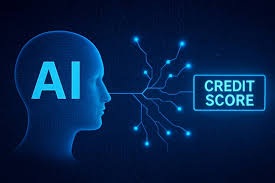
AI-driven digital lending is becoming a cornerstone of growth in Pakistan’s financial sector. According to the Jinnah Institute, AI will move beyond basic credit scoring to become a decisioning engine across the fintech stack, powering underwriting, fraud detection, collections optimisation, customer engagement, and early risk warning systems .
What this means for businesses:
In a market like Pakistan, where traditional financial data is thin, fintechs that can responsibly harness alternative data — transactional, behavioural, and supply-chain data — will unlock new borrower segments while improving portfolio resilience .
The Kissan Card example:
BOP’s Kissan Card, designed for small farmers, is a prime example of this digital approach. The bank integrated national identity databases and mobile data registries to create a seamless loan application process, improving processing speed and broadening access to banking services in rural areas .
AI in Fraud Detection and Cybersecurity
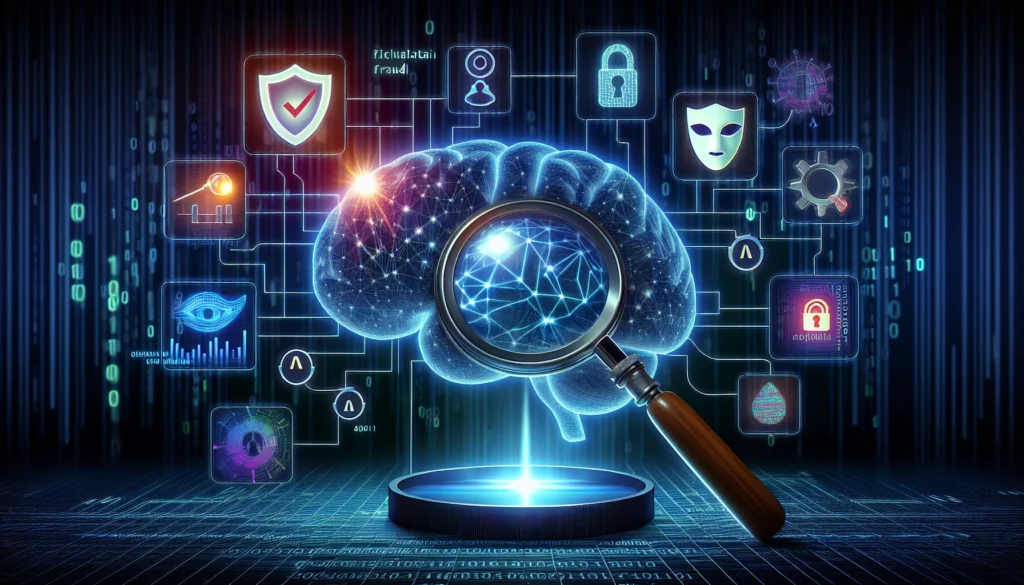
AI-Powered Fraud Detection
Financial fraud continues to pose a significant and persistent challenge for Pakistan’s banking sector, particularly amid rapid digitalization . A 2026 study published in Nature examined how AI-based fraud detection and prevention systems are implemented in Pakistani banks.
Key findings:
| Finding | Implication |
|---|---|
| Limited awareness among branch staff | AI deployment remains centralized |
| Technical availability of AI | Operational utilization constrained |
| User acceptance, workforce capability critical | Organizational readiness shapes AI effectiveness |
The study highlights the urgent need for enhanced FinTech literacy, decentralized AI deployment, and stronger governance mechanisms to bridge the strategic-operational divide .
Cybersecurity Overhaul
In May 2026, Pakistan’s Federal Minister for Finance convened an urgent virtual meeting with commercial banks, directing regulators and financial institutions to strengthen their cyber defences as AI tools give criminal actors new and more dangerous capabilities to attack the banking system .
The threat landscape:
- AI-enabled cyber tools allow hostile actors to identify system vulnerabilities
- Attackers can develop targeted exploits and execute multi-stage attacks
- Traditional detection and response systems struggle to match attack speeds
The finance minister directed the State Bank of Pakistan and the Pakistan Banks Association to conduct a comprehensive review of existing cybersecurity frameworks, identify gaps in current protections, and assess the overall state of cyber risk management .
NAB’s AI Investigation System
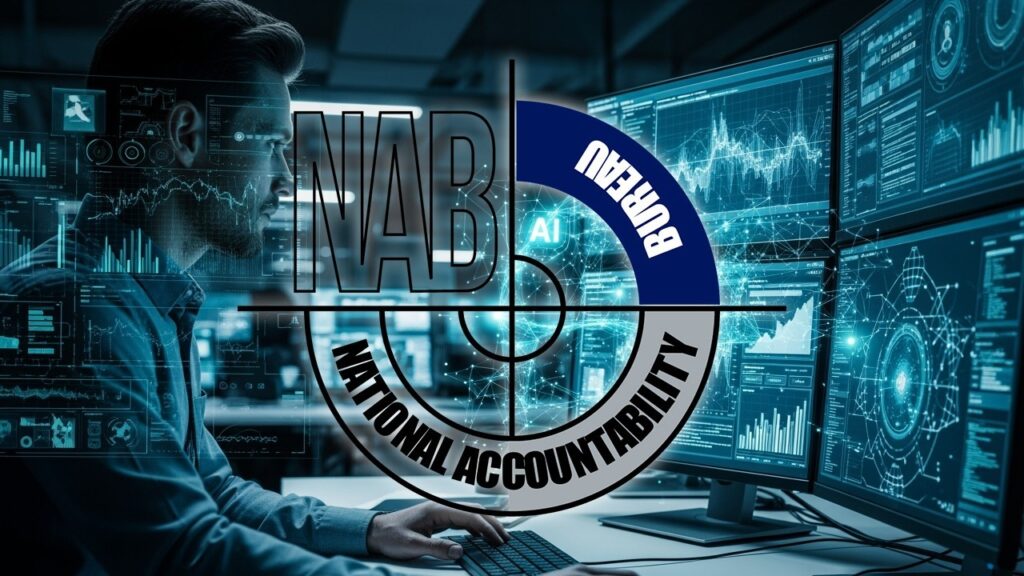
The National Accountability Bureau has established an AI-based investigation system aimed at probing financial crimes and white-collar offences. According to Dr Yasar Ayaz, Chairman of the National Centre of Artificial Intelligence, this is Pakistan’s first sovereign generative AI-powered investigation system .
The system covers:
- Complaint verification
- Inquiry management
- Investigation support
- Financial analysis
- Evidence management
- Decision-making assistance
AI for Corporate Finance: Forecasting and Cost Management
For medium-sized enterprises, AI-powered finance is becoming a practical tool for improving forecasting, budgeting, and reporting .
AI-Driven Forecasting
According to Obaid ur Rehman, a Digital Finance Transformation Expert, AI-driven forecasting has improved accuracy by around 20 percent while reducing decision-making time by nearly 30 percent .
Practical approach:
“Start with a focused use case, such as cash flow projections, where data is already available and impact is visible.”
Automated Reporting
Many finance teams still rely on manual processes that require significant time to consolidate and verify information. According to Obaid, this is where automation can deliver immediate value: “When routine reporting is automated, finance teams can shift their focus from preparing numbers to interpreting them” .
Cost Management
Zero-based budgeting, when combined with data-driven tools, allows organizations to reassess costs more effectively. In several cases, this has led to recurring savings in the range of 10 to 15 percent by identifying inefficiencies that traditional methods tend to overlook .
Fintech Innovation and Buy Now Pay Later

Pakistan’s fintech ecosystem is moving toward a more mature, consequential phase, where scale, intelligence, and integration will matter more than novelty .
Embedded Finance and Banking-as-a-Service
One of the most defining trends is the rise of embedded finance and Banking-as-a-Service (BaaS). Fintechs will increasingly operate behind the scenes, integrating financial services directly into high-frequency ecosystems such as SME supply chains, agri-input distribution, marketplaces, logistics networks, and payroll platforms .
Buy Now Pay Later (BNPL) Expansion
Pakistan’s digital finance landscape has received a major boost with the arrival of Alibaba-backed Koko Tech Pakistan Pvt. Ltd., which has been granted a BNPL licence by the SECP .
What this means:
- Koko Tech will bring AI-powered credit assessment systems
- Modern, technology-driven lending options expected to reshape consumer financing
- Young consumers, freelancers, and small business owners likely to benefit
AI in Banking Customer Experience
Voice Banking
UBL’s AI-powered Voice Command feature represents a shift toward conversation-led digital banking experiences. This reduces friction in financial services by enabling customers to interact naturally through voice commands rather than navigating multiple screens or menus .
Faster Onboarding
According to industry experts, Pakistani banks should follow the global trend of adopting AI solutions to accelerate customer onboarding and strengthen Know Your Customer (KYC) compliance .
Benefits of AI in onboarding:
- Reduce onboarding time from days to minutes
- Strengthen anti-money laundering monitoring
- Improve market surveillance and investor analytics
- Help attract foreign investment
Challenges in AI Implementation

Despite the potential of AI-powered finance, practitioners emphasize that successful implementation depends on more than tools alone. Data quality, process discipline, and team capability remain critical .
Key challenges identified in research:
Expert advice: “Start with one process, ensure the data is reliable, and build from there. When the foundation is right, the benefits of AI become much more consistent and scalable” .
The Future of AI-Powered Finance in Pakistan
Looking ahead, 2026 represents a window of opportunity for Pakistani businesses. Organizations that take a structured and incremental approach to AI adoption are likely to build stronger finance capabilities over time .
Key trends to watch:
- AI will become a decisioning engine across the fintech stack
- Embedded finance and BaaS will transform how financial services are delivered
- AI-powered credit scoring will unlock new borrower segments
- Cybersecurity will remain a top priority as AI threats evolve
- Banking customer experience will become more conversational and accessible
As the broader ecosystem continues to evolve, the focus is shifting from experimentation to execution. The organizations that succeed will be those that treat AI not just as a tool, but as part of a more structured approach to finance transformation .
FAQ
Q: What is AI-powered finance?
A: AI-powered finance uses artificial intelligence for tasks like credit scoring, fraud detection, forecasting, budgeting, and reporting. In Pakistan, banks and fintechs are adopting AI to improve efficiency and financial inclusion.
Q: How are Pakistani banks using AI?
A: Pakistani banks are using AI for credit scoring (Bank of Punjab’s Kissan Card), credit underwriting (BankIslami’s FOCUS platform), and voice banking (UBL’s Voice Command feature) .
Q: Is AI-powered finance growing in Pakistan?
A: Yes. The government is committing significant investment toward AI by 2030, and financial institutions are increasingly adopting AI-driven solutions .
Q: What are the challenges of AI adoption in Pakistan’s financial sector?
A: Key challenges include data quality, system integration, workforce skills gaps, and the need for stronger governance mechanisms .
Q: How can small businesses benefit from AI-powered finance?
A: SMEs can benefit from AI-driven credit scoring, automated reporting, and improved forecasting. The Bank of Punjab has already provided loans to over 710,000 farmers using AI-powered systems .
Related Posts on Pixelaizone
- “AI in Climate Change 2026: Powerful Strategies for Disaster Management in Pakistan”
- “AI Agents in 2026: The Ultimate Guide to How Autonomous Systems Are Changing Work”
- “AI in Pakistan Education 2026: A Complete Guide to the Future of Learning (Amazing Transformation)”
- Hostinger Review 2026: Why This is the Best Hosting for Small Businesses & Beginners
- The Future of Work in 2026: How AI Is Reshaping Jobs, Skills, and Careers
- 2026 AI Trends for Small Businesses: What’s Actually Working Right Now
- AI Side Hustles 2026: 7 Easy Ways to Earn Extra Income with Artificial Intelligence
- “AI Productivity Hacks 2026: 7 Ways to Work Smarter, Not Harder”
- “How to Build an AI-Powered Business in 2026 (No Coding Required) – The Ultimate Guide”
- “AI Agents vs AI Assistants: The Ultimate Guide to Understanding the Critical Difference in 2026”
- “AI Content Creation 2026: How to Write Blog Posts That Actually Rank (Proven Tips)”
What aspect of AI-powered finance excites you most? Drop a comment below!