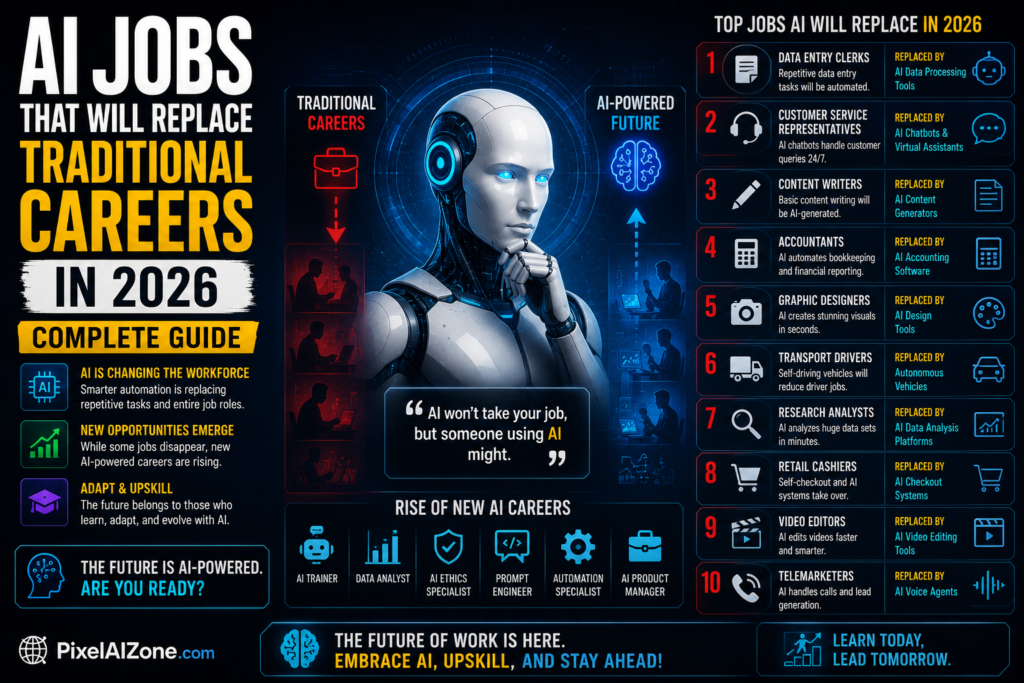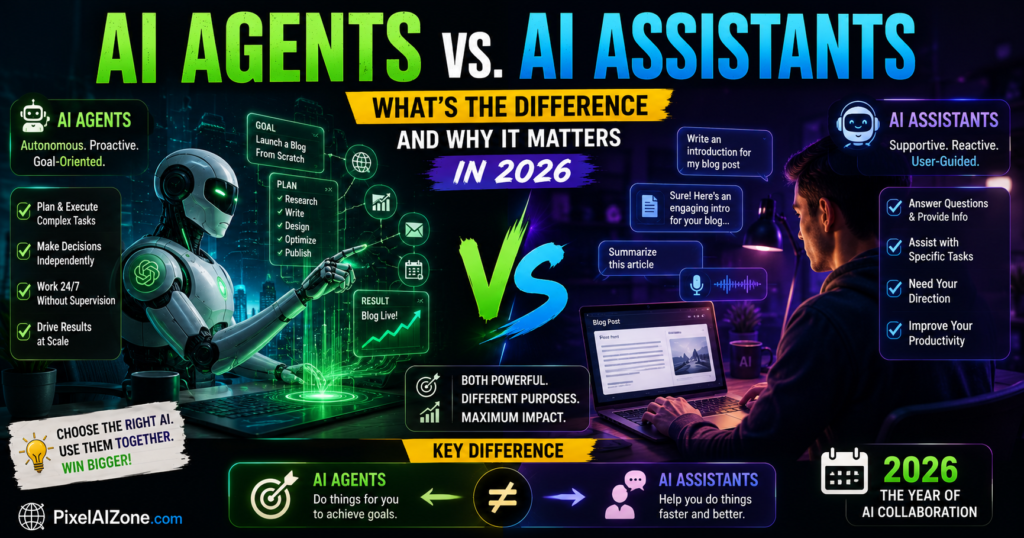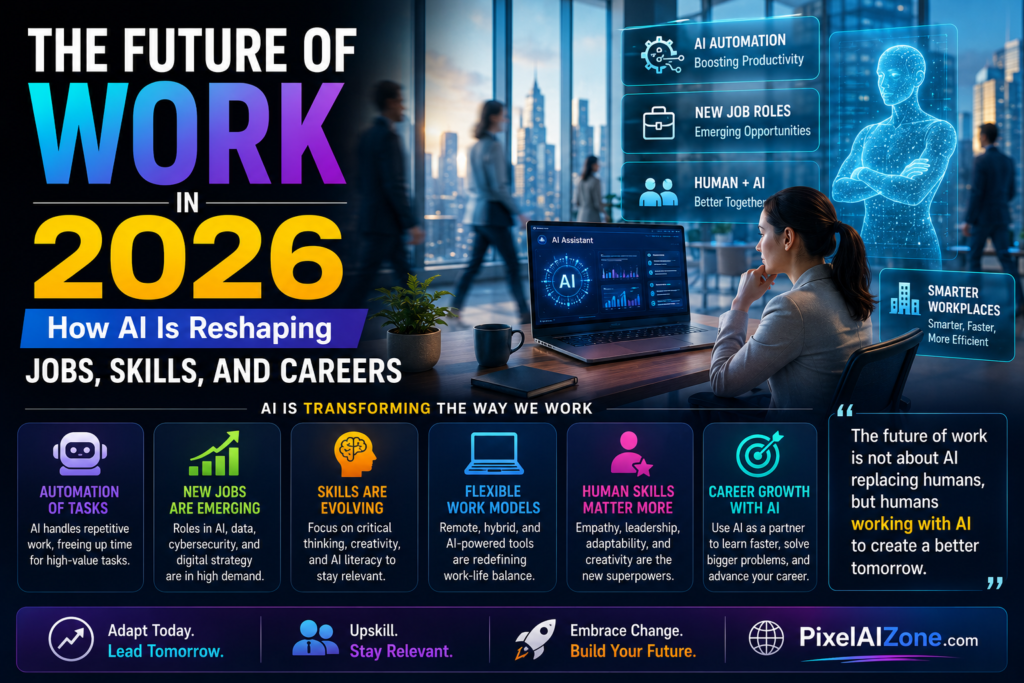
Is AI taking your job? Or creating new ones? Here’s what the future of work in 2026 actually looks like.
Let me show you something about the future of work in 2026.
Every day, there’s a new headline about AI taking jobs. About robots replacing humans. About entire industries disappearing.
But here’s the truth about the future of work in 2026 that most headlines miss: AI is creating more jobs than it’s eliminating.
According to data from the Bureau of Labor Statistics, office and administrative roles are expected to decline by roughly 1% annually through 2033. But jobs like data science, software development, and IT management are expected to grow by nearly 20% in the same period.
The question about the future of work in 2026 isn’t whether AI will change work. It already is. The question is: how do you prepare?
Table of Contents
- The Truth About AI and Jobs in 2026
- Jobs AI Is Actually Impacting Right Now
- New Jobs AI Is Creating in 2026
- Skills That Are Becoming More Valuable
- Why Human Skills Matter More Than Ever
- How to Start Future-Proofing Your Career Today
- FAQ
The Truth About AI and Jobs in 2026
There’s a lot of fear around AI and job displacement. But the data about the future of work in 2026 tells a more nuanced story.
Bureau of Labor Statistics
According to recent research, occupations that require high-level interpersonal skills, creative thinking, and complex problem-solving are less likely to be displaced by AI. This is a key insight for the future of work in 2026.
On the other hand, roles that involve predictable, repetitive tasks are seeing the highest level of AI integration. Understanding the future of work in 2026 means understanding this shift.
McKinsey research
Key insights about the future of work in 2026:
| Job Type | Impact | What’s Happening |
|---|---|---|
| Repetitive tasks | Displacement | Routine clerical work is being automated |
| Technical roles | Augmentation | IT and AI specialists are in high demand |
| Interpersonal roles | Expansion | Healthcare, education, and social services remain resilient |
According to projections, the future of work in 2026 is shifting — not collapsing. The workforce is transforming, and many of the jobs of the future don’t even exist yet.
A study by McKinsey suggests that by 2030, up to 30% of current work activities could be automated. But that same study found that automation will also create entirely new roles that we can’t fully imagine today. This is the future of work in 2026 that we need to prepare for.
This shift means that the challenge isn’t AI taking jobs. The challenge for the future of work in 2026 is developing the skills to work alongside AI.
Jobs AI Is Actually Impacting Right Now
1. Administrative and Clerical Roles

In the future of work in 2026, AI can now draft emails, schedule meetings, organize files, and even generate reports. This means many traditional administrative tasks require less manual human input.
That doesn’t mean administrative roles are disappearing. Rather, they are evolving — shifting from routine work to strategic and interpersonal tasks. This is a major shift in the future of work in 2026.
2. Customer Service


The future of work in 2026 includes AI chatbots handling common customer queries and basic support tasks. But advanced, high-level customer service still requires human empathy and judgment.
3. Data Entry and Processing

In the future of work in 2026, AI can process and analyze data faster than any human. But it cannot interpret the data or understand its broader implications. That’s where human insight is still essential.
4. Content Creation and Copywriting

AI can now write product descriptions, create social media posts, and draft articles. However, the future of work in 2026 still requires high-quality, nuanced, human-centered content that needs a human touch.
5. Transportation and Warehousing

Autonomous vehicles and robot warehouse workers are becoming more common in the future of work in 2026. But they still need human oversight, maintenance, and management.
The common thread for the future of work in 2026: AI handles the repetitive, predictable, and routine tasks. Human workers are focusing on the creative, strategic, and interpersonal aspects.
New Jobs AI Is Creating in 2026
While some roles are changing, AI is also creating entirely new job categories. The future of work in 2026 includes roles that didn’t exist five years ago. Here are three real-world examples:
1. Prompt Engineer

What they do: Crafting and refining prompts to get better results from AI tools.
Why it’s growing: As more people adopt AI tools, the ability to interact effectively with them becomes valuable. This is a key role in the future of work in 2026.
2. AI Operations Manager

What they do: Overseeing the deployment of AI tools within organizations.
Why it’s growing: Companies need someone to manage AI integration, compliance, and monitoring in the future of work in 2026.
3. AI Trainer

What they do: Training AI models on organization-specific data and processes.
Why it’s growing: Off-the-shelf AI models need refinement to work well in specific business contexts. This is essential for the future of work in 2026.
Key insight about the future of work in 2026: These roles didn’t exist five years ago. They were created by the same technology that many people fear.
Skills That Are Becoming More Valuable
The World Economic Forum estimates that 50% of all employees will need reskilling by 2025 due to the adoption of AI. For the future of work in 2026, certain skills are becoming more valuable:
World Economic Forum
1. Emotional Intelligence
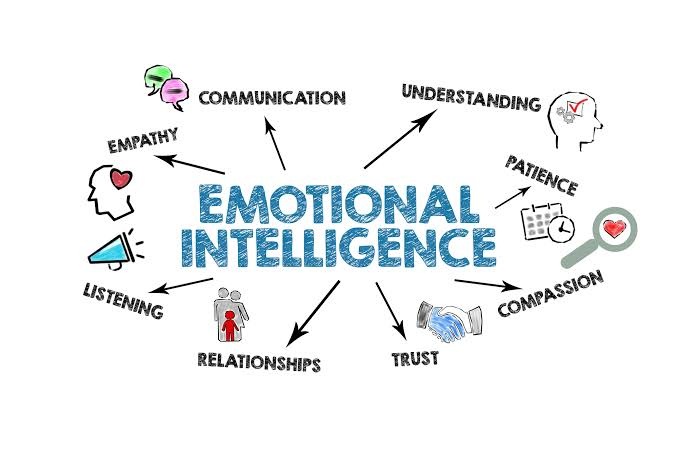
Understanding and managing human emotions. Empathy, active listening, and relationship-building are qualities AI cannot replicate. This is essential for the future of work in 2026.
2. Critical Thinking

Analyzing complex situations and making sound decisions. AI can process data, but it struggles with nuanced evaluation. This skill is critical for the future of work in 2026.
3. Creativity
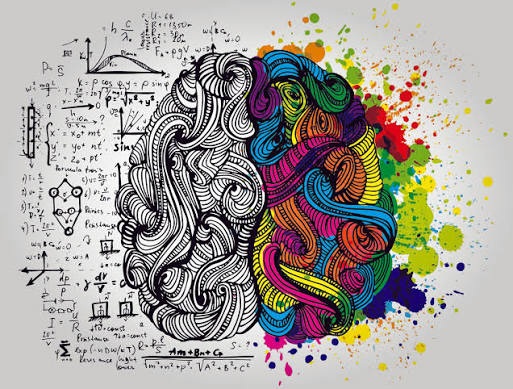
Generating original ideas and novel solutions. AI can combine existing ideas, but genuine creativity is a human strength. The future of work in 2026 rewards creative thinkers.
4. Adaptability
Learning new skills and adjusting to change. As technology evolves, the ability to adapt becomes crucial for the future of work in 2026.
5. Problem-Solving

Tackling unstructured challenges. AI works well with clear parameters, but real-world problems are messy. This is a key skill for the future of work in 2026.
6. Human Judgment

Contextual reasoning and ethical decision-making. These abilities remain firmly in the human domain and are essential for the future of work in 2026.
The bottom line about the future of work in 2026: The most valuable skills are the ones AI cannot easily replicate.
Why Human Skills Matter More Than Ever
As AI handles more routine tasks, the value of human skills is actually increasing in the future of work in 2026.
Here’s why:
- AI has no emotional intelligence – It can simulate empathy, but it doesn’t truly understand human emotions.
- AI lacks real-world experience – It knows patterns but has never experienced life.
- AI cannot build genuine trust – Relationships are built on human connection.
- AI struggles with complexity – It works best in predictable environments.
This means the professionals who will thrive in the future of work in 2026 are the ones who can combine technical proficiency with uniquely human skills.
How to Start Future-Proofing Your Career Today
Step 1: Understand What AI Can and Cannot Do
AI can automate routine and predictable tasks. It cannot replace empathy, judgment, nuanced understanding, or true creativity. Knowing this helps you focus on areas where your value is highest in the future of work in 2026.
Step 2: Develop Skills That AI Can’t Easily Replace
Focus on skills like:
- Strategic thinking
- Complex decision-making
- Emotional intelligence
- Relationship-building
- Creative problem-solving
These are the skills that matter most for the future of work in 2026.
Step 3: Build a Learning Habit
Continuous learning is the single most reliable way to stay competitive in the future of work in 2026. Regularly invest time in developing new skills and updating existing ones.
Step 4: Experiment with AI Tools
The best way to understand the future of work in 2026 is to use AI. Experiment with ChatGPT, Canva AI, and other free AI tools. Understanding how they work will help you identify where they can help — and where they cannot.
Step 5: Focus on Your Human Strengths
Your personal experiences, authentic voice, and genuine insights are things no AI can replicate. Make them part of your professional identity for the future of work in 2026.
FAQ
Q: Will AI take my job?
A: AI will change jobs — not eliminate them entirely. The future of work in 2026 is about transformation, not destruction. Routine tasks are being automated, but new roles are being created.
Q: What jobs are safest from AI?
A: Jobs that require emotional intelligence, complex problem-solving, creativity, and human judgment. The future of work in 2026 rewards these skills.
Q: What jobs are most at risk?
A: Jobs that involve highly routine, predictable tasks — like basic data entry, simple customer service, and routine clerical work — are seeing the highest level of automation in the future of work in 2026.
Q: Do I need to learn coding to stay relevant?
A: Not necessarily. Understanding how AI works is helpful, but your ability to communicate effectively, empathize with others, and think strategically is essential for the future of work in 2026.
Q: How much of my work could be automated?
A: According to McKinsey, up to 30% of current work activities could be automated by 2030. But that same study found that automation will also create entirely new roles for the future of work in 2026.
Q: What should I do if I’m worried about AI?
A: Learn new skills, especially human skills like empathy and communication. Embrace continuous learning, and experiment with AI tools to understand the future of work in 2026.
Final Thoughts
The future of work in 2026 looks different than the future of work a decade ago — but it’s not a dystopian picture of mass unemployment.
Yes, jobs are changing. Some are disappearing. But new ones are emerging.
The key isn’t to fear AI. The key is to develop the skills that make you irreplaceable.
That means:
- Building your emotional intelligence
- Developing your creative thinking
- Learning how to work alongside AI
- Focusing on what makes you human
Your future-proof career starts today.
Related Posts on Pixelaizone
- 2026 AI Trends for Small Businesses: What’s Actually Working Right Now
- AI Side Hustles 2026: 7 Easy Ways to Earn Extra Income with Artificial Intelligence
- “AI Productivity Hacks 2026: 7 Ways to Work Smarter, Not Harder”
- “How to Build an AI-Powered Business in 2026 (No Coding Required) – The Ultimate Guide”
- “AI Agents vs AI Assistants: The Ultimate Guide to Understanding the Critical Difference in 2026”
- “AI Content Creation 2026: How to Write Blog Posts That Actually Rank (Proven Tips)”
- ChatGPT vs Gemini in 2026 (Powerful AI Comparison Guide)
- Top 10 Powerful Work From Home Jobs for Students in 2026
- How to Start a Blog and Make Money in 2026 (Ultimate Beginner Guide)
- Ultimate Guide: Best AI Tools for Content Creators in 2026
- Ultimate Guide: Best Web Hosting for Beginners in 2026
- Ultimate Guide: Best Freelancing Skills to Learn in 2026 for Beginners
- Free AI Tools For Students In 2026
What skill are you planning to develop next? Drop a comment below!