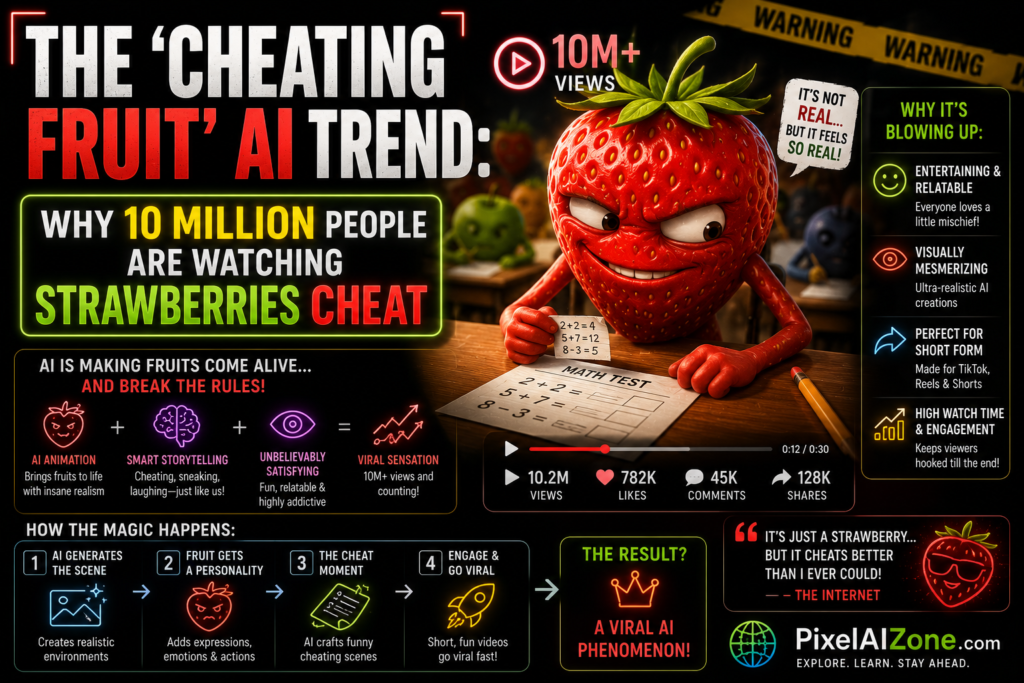
From a cheating strawberry to a 300-million-view soap opera, AI-generated fruit dramas have taken over social media. Here’s why.
The cheating fruit AI trend 2026 has taken social media by storm, with millions watching strawberries cheat on their partners.
Let me show you something.
In late February 2026, a TikTok video appeared showing a strawberry cheating on her husband with an eggplant . The 60-second Pixar-style clip ended with the husband clutching a purple newborn, sobbing that the baby “looks just like your boss” .
Within weeks, this bizarre concept had exploded. The account @ai.cinema021 launched “Fruit Love Island” on March 13, 2026 — and within nine days, it had become the platform’s fastest-growing account, pulling over 3 million followers and 300 million total views . Individual episodes averaged 10 to 15 million views, with one hitting 39 million .
This isn’t just another internet trend. It’s a window into how AI is reshaping entertainment, and what happens when algorithms optimize for engagement — not quality.
This guide explores the cheating fruit AI trend 2026 and what it reveals about the future of AI-generated entertainment.
Table of Contents
- What Is the ‘Cheating Fruit’ Trend?
- The Key Players and Viral Moments
- Why It Went Viral: The Psychology of Slop
- The Design of AI Slop
- The Desi Twist: Samosa, Jalebi, and Karela
- The Dark Side: Racism, Violence, and Child Safety
- What This Means for AI and Content Creation
- FAQ
What Is the ‘Cheating Fruit’ Trend?
The cheating fruit AI trend 2026 started with a simple video of a strawberry cheating on her husband.
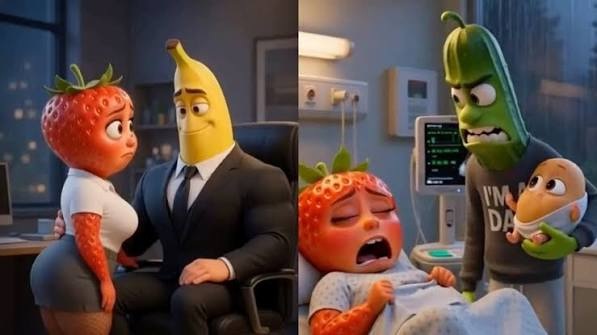
The “cheating fruit” trend features AI-generated videos of anthropomorphic fruits and vegetables in dramatic, soap-opera-style stories. Characters like Strawberrina, Bananito, and Melonita cycle through love triangles, paternity scandals, and emotional betrayals .
Key characteristics of the genre:
The trend began with a simple premise: a strawberry cheating on her husband with an eggplant . The concept quickly gained attention, and creators began making more episodes with similar themes . Soon, it turned into multi-part storylines, each adding more drama .
Think of it like soap operas for smartphones — only the stars are lustful, anthropomorphic strawberries and bananas .
The Key Players and Viral Moments
The cheating fruit AI trend 2026 has generated over 300 million views across TikTok and Instagram.
The Account That Changed Everything
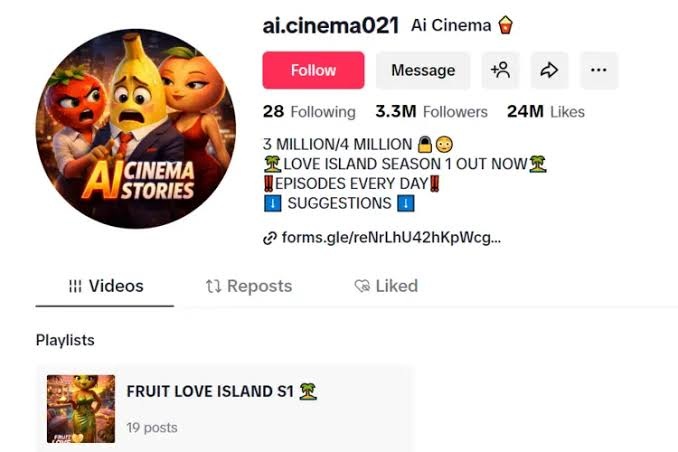
@ai.cinema021 launched “Fruit Love Island” on March 13, 2026. Within nine days, the account had become TikTok’s fastest-growing, pulling over 3 million followers and 300 million total views .
Individual episodes averaged 10 to 15 million views. One episode, “New Dates… New Doubts,” hit 39 million views .
The Original Video
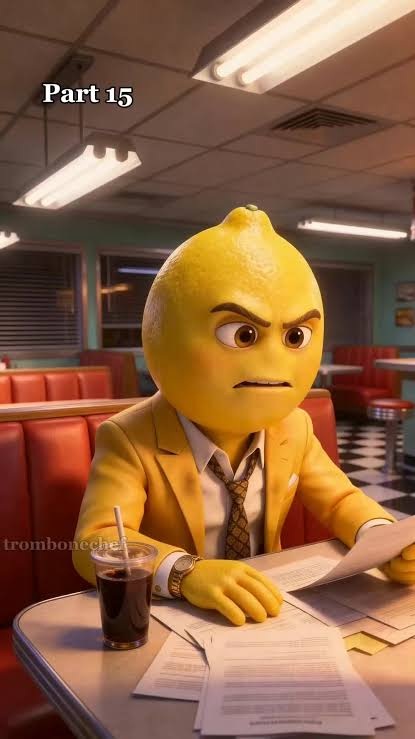
The first viral video was posted by @trombonechef in late February 2026 . It featured a strawberry cheating on her husband with an eggplant boss, resulting in an eggplant baby .
The clip reached over 26 million views .
The Celebrity Effect
Zara Larsson, the Swedish pop star, posted about the trend to her 9 million TikTok followers with the caption “Sorry I can’t hang out today, I gotta see what’s happening with choclatina and strawberto” . She later deleted the post after being criticized for promoting AI content despite previously speaking against it .
The cheating fruit AI trend 2026 has become the fastest-growing content genre on TikTok.
Why It Went Viral: The Psychology of Slop
Understanding the cheating fruit AI trend 2026 requires looking at the psychology of why people watch.
According to trend experts, it’s the “perfect formula” for social media .
1. Short-Form Video and Emotional Whiplash
Short-form video platforms run on something close to variable reinforcement — the same psychological pattern behind gambling . The content delivers emotional whiplash: betrayal, then comedy, then pathos, all within sixty seconds .
The unpredictability keeps the loop running . You don’t know whether the next episode will be absurd or weirdly affecting — and that keeps you watching.
2. Narrative Compression
“Fruit Love Island” stripped the Love Island format to its bare structure: romantic contestants, threats to those romances, and a vote . That skeleton gave audiences a reason to return, pick sides, and post comments demanding answers.
A full fan universe — recap accounts, fan art, spinoff series — formed around a show that had been online for less than two weeks . Actual Love Island took ten seasons to build that kind of obsession .
3. Ironic Distance
Fruit characters create automatic ironic distance, letting you invest in Clementine’s paternity scandal without fully admitting you’re doing it . The synthetic quality of the visuals — the slightly off proportions, the half-second expression delays — deepened that distance.
Research on moral disengagement suggests audiences relax their scrutiny when harm feels fictional or abstract . The AI rendering made everything feel more fictional, helping people engage without guilt.
4. It’s “Funny Because It’s Bad”
Adam Aleksic, a linguist and content creator who studies AI slop, says people shouldn’t necessarily feel bad for enjoying the pulpy drama .
“It’s funny because it’s bad. Yes, there is an innate, like, drama to it that does captivate people, but we are all aware on the meta level that this is just shitty content, and that extra added awareness is part of how you look at these videos.”
5. Escapism
As one creator put it: “I think that’s why we watch them, because it’s like, it’s either that or you’re going to bed feeling like the world is literally going to be on fire tomorrow” .
Users prefer the momentary relief of the fruit videos, even if they’ve gotten into their heads — so much that they regularly quote their more ridiculous lines .
The Design of AI Slop
The cheating fruit AI trend 2026 is a perfect example of AI slop designed for engagement.
The term “AI slop” has gained traction across design criticism circles to describe this category of output: technically functional, emotionally optimized, and aesthetically hollow .
Technical Inconsistencies
The videos are often shoddily made :
According to DesignRush analysis, the mouths are the most telling detail: lip sync lands near the audio rather than with it, and expressions like shock, betrayal, or longing arrive a beat late .
The Uncanny Valley
What you actually feel watching it is harder to name. It’s the sense of watching emotion performed by something that studied what emotion looks like without ever having felt it .
The uncanny valley will narrow. Proportions will improve. Expression timing will get closer. But if the underlying design process stays optimization-first, you get higher-quality slop. Better rendering doesn’t fix that. It just makes the slop more convincing .
The Desi Twist: Samosa, Jalebi, and Karela
The cheating fruit AI trend 2026 has also inspired Desi versions with samosa and jalebi dramas.

The trend has also spread globally, including to South Asia, where creators are making local versions with desi-flavored items including Samosa and Jalebi, as well as Karela and Aloo .
What’s happening:
- Creators are turning Pakistani and Indian foods into dramatic characters
- The stories follow similar dramatic themes of betrayal and romance
- This is bringing the trend to a new audience
The regional angle: A samosa and jalebi “love story” is as entertaining as strawberry and eggplant.
The cheating fruit AI trend 2026 has inspired creators worldwide to make their own versions.
The Dark Side: Racism, Violence, and Child Safety
The cheating fruit AI trend 2026 has a dark side, including racist and violent content.
Racist and Offensive Content
Some of the videos also come across as racist . Aleksic noted homophobic content in one of the fruit Love Island episodes .
Disturbing Themes
Some content has dipped into more unsettling territory :
The Cycle of Degradation
According to Aleksic, AI slop creators tend to focus solely on finding the right formulas to go viral, even if that veers into rage bait — which can be especially problematic when the creators are anonymous .
“They’re trying to do something quickly that gets views. They don’t have a strong moral code.”
He notes that these AI trends tend to degrade before they disappear, as creators try to hang on by making increasingly extreme and offensive content to keep the paycheques coming .
Child Safety Concerns
Many young users spend hours watching such content . Critics say this type of storytelling may not be suitable for all audiences . The content has been compared to “adult Elsa Gate” — where inappropriate content is packaged in a kid-friendly style .
What This Means for AI and Content Creation
The Optimization Problem
Fruit Love Island is a leading edge, not an outlier . The broader AI slop trend on social media points to a content landscape increasingly shaped by optimization rather than creative intent .
The question is not whether AI-generated visual content will proliferate — it will, and rapidly. But what design standards the industry will hold it to remains uncertain .
The Emotional Primitive Cycle
When content is designed by optimization, it reliably converges on the same emotional triggers: status, betrayal, desire, humiliation. These are not the full range of human experience. They are the parts of human experience that are easiest to recognize and hardest to look away from .
An algorithm trained on engagement will always find them .
Today it’s fruit. Tomorrow it’s something else. That’s the real trajectory: not a world full of fruit dramas specifically, but a content environment where a growing proportion of visual material has been optimized toward these same emotional primitives, dressed in whatever rendering style the current AI aesthetic favors .
The Brand Trap
Several brands made the mistake of treating Fruit Love Island as a trend worth chasing . The reach was real. What they misread was what that reach actually meant.
Virality belongs to specific moments, and you can’t borrow it by association . Brands that chase viral moments are essentially redecorating their shop window to match whatever was trending on a street they don’t live on .
FAQ
Q: What is the “cheating fruit” trend?
A: It’s a genre of AI-generated videos featuring anthropomorphic fruits and vegetables in dramatic, soap-opera-style stories. Characters like Strawberrina and Bananito cycle through love triangles, paternity scandals, and emotional betrayals .
Q: How did it start?
A: The trend began in late February 2026 with a TikTok video showing a strawberry cheating on her husband with an eggplant. The video went viral, and creators began making more episodes with similar themes .
Q: Why are these videos so popular?
A: They combine short-form video, emotional whiplash, ironic distance, and the “funny because it’s bad” effect. They’re the perfect formula for social media engagement .
Q: What is “AI slop”?
A: AI slop is content that is technically functional, emotionally optimized, and aesthetically hollow — produced quickly for engagement rather than creative intent .
Q: Are there concerns about this trend?
A: Yes. Some videos contain racist, homophobic, or violent content. There are also concerns about children being exposed to inappropriate content .
Q: Is this trend harmful?
A: It depends. Some experts worry that AI slop trends are “polluting” social media feeds and that creators will make increasingly extreme content to stay viral. Others argue it’s harmless escapism in a difficult world .
Q: What is the cheating fruit AI trend 2026?
A: It’s AI-generated fruit soap operas.
Final Thoughts
The “cheating fruit” trend is more than just a weird internet moment. It’s a sign of where content creation is heading when algorithms, not designers, are making the calls .
The bar Fruit Love Island cleared: it reached people, quickly, at massive scale, and made them feel something immediate.
The bar it missed entirely: it left nothing behind. No image that lingers, no idea that travels, no feeling that matures into something worth having .
The standard isn’t virality, or engagement rate, or reach. The standard is design that clears the first bar and the second one. Fruit Love Island cleared one. The industry should stop treating that as enough .
The cheating fruit AI trend 2026 shows where content creation is heading when algorithms optimize for engagement.
The cheating fruit AI trend 2026 is a sign of where AI entertainment is heading.
Related Posts on Pixelaizone
- “AI Agents Are Changing How the World Shops 2026 — Here’s How (Revolutionary Shift)”
- “1 in 4 People Now Use AI Every Day — Here’s What They’re Actually Doing (Shocking Insights)”
- “AI Has Crossed the Behavioural Threshold in 2026: Essential Guide to the Shocking Shift from Experimentation to Dependence”
- “The AI Trust Paradox 2026 Revealed : Why 74% of People Use AI Daily But Don’t Trust It (Powerful Insights)”
- “Pakistan’s Rs 283 Billion AI Programme 2026: A Game-Changing Opportunity for the Nation”
- Why Your AI Content Is Invisible: 9 Ways to Stand Out in 2026
- “The $1.3 Billion AI Ad Market: What It Means for Your Business (Game-Changing Trends)”
- “The Dark Side of AI in Pakistan: 5 Critical Threats We’re Ignoring”
- “Pakistan’s $1 Billion AI Investment 2026: What It Means for You (Game-Changing Opportunities)”
- “AI-Powered Finance in 2026: How Pakistani Businesses Are Transforming Banking (Revolutionary Changes)”
- “AI in Climate Change 2026: Powerful Strategies for Disaster Management in Pakistan”
- “AI Agents in 2026: The Ultimate Guide to How Autonomous Systems Are Changing Work”
- “AI in Pakistan Education 2026: A Complete Guide to the Future of Learning (Amazing Transformation)”
What do you think about the AI fruit trend? Drop a comment below!