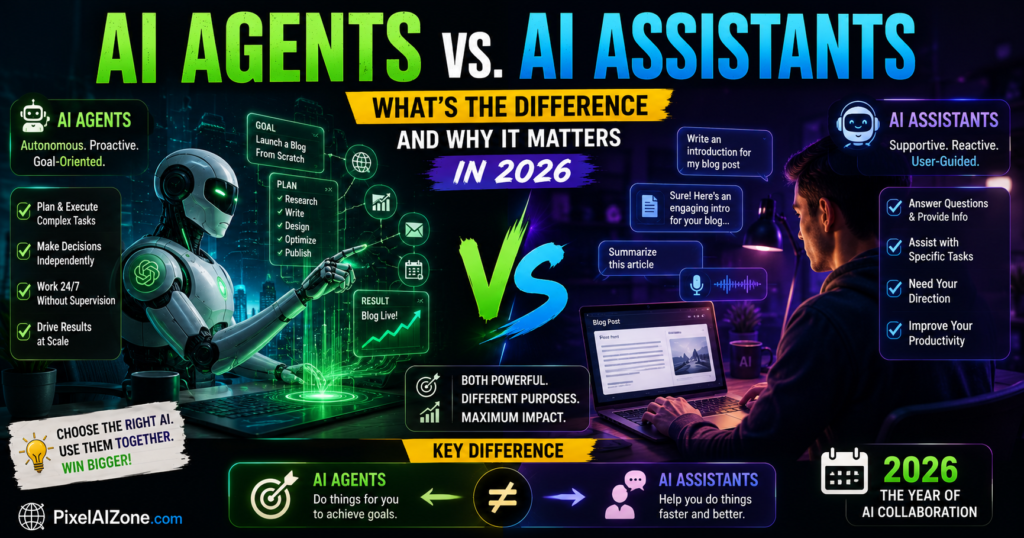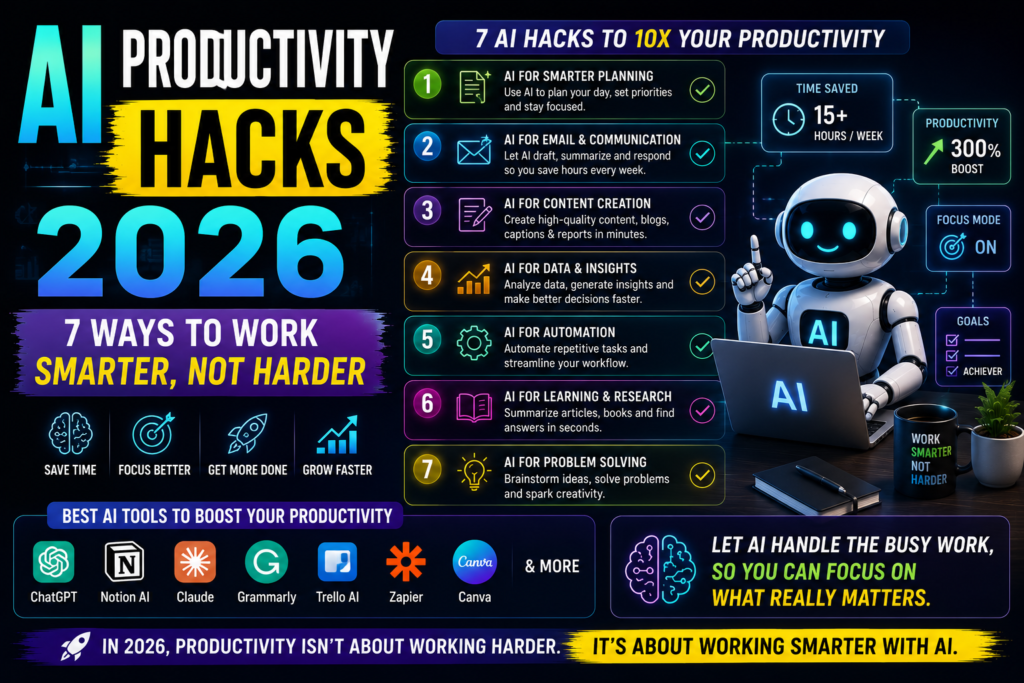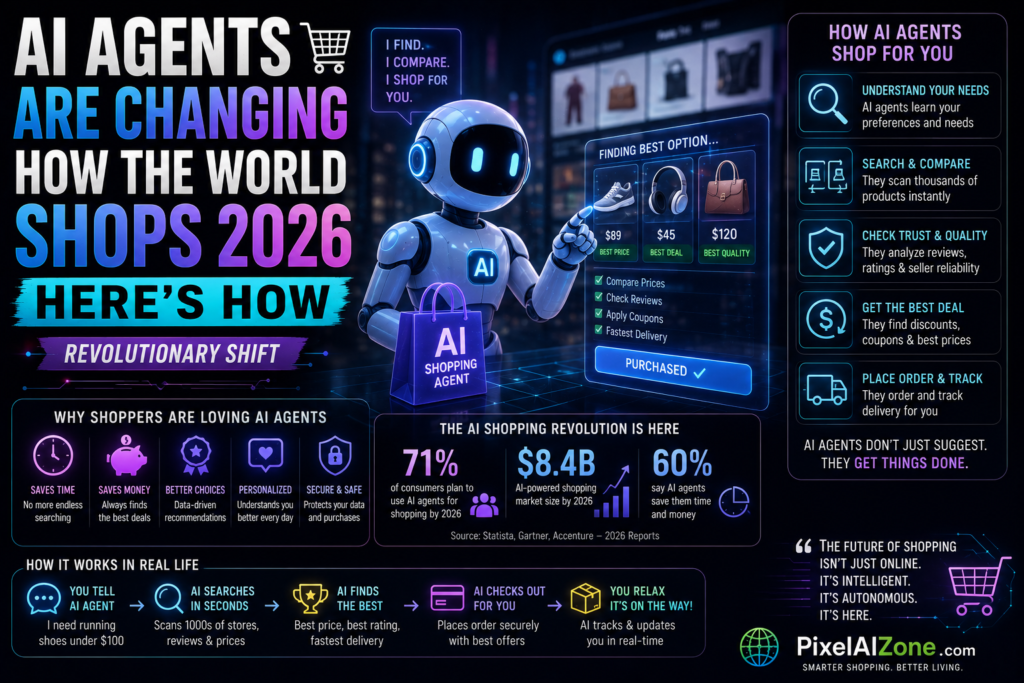
From ChatGPT and Gemini to Amazon’s Rufus, AI agents are becoming the new shopping assistants. Here’s what’s actually happening right now. AI agents are changing how the world shops — and this shift is happening faster than most retailers realize.
Let me show you something.
Agentic commerce — online shopping managed by AI agents — is poised to change the way we purchase nearly everything from toothpaste to car insurance . According to McKinsey & Co., by 2030 we could see up to $1 trillion in orchestrated revenue in the retail market alone .
Consumer adoption is accelerating fast. Traffic to US retail sites from GenAI browsers and chat services increased 4,700% year-over-year in July 2025 . And these users are engaging more deeply: they spend 32% more time on the site, browse 10% more pages, and have a 27% lower bounce rate .
But here’s the catch: Most retailers are not ready for this shift. According to industry experts, the customer journey is no longer linear — we must “design semantically rich” sites optimized for agents, not just humans . The brands that don’t adapt risk being reduced to background utilities in agent-controlled marketplaces .
This guide explains how AI agents are changing how the world shops and what it means for retailers and consumers.
Table of Contents
- What Is Agentic Commerce?
- The Key Players: Who’s Building the Agent Ecosystem
- How AI Agents Actually Shop for You
- What AI Agents Look For When Choosing Products
- The Threat to Retailers: Disintermediation
- How Retailers Can Win in the Agent Era
- FAQ
How AI Agents Are Changing How the World Shops: What Is Agentic Commerce?
Understanding how AI agents are changing how the world shops starts with knowing the three types of agentic commerce.
Agentic commerce is the next step in online shopping, connecting the search and recommendation capabilities of an LLM chatbot with the low-friction user experience of e-commerce . Consumers can ask an AI agent to re-up regularly used household items, select the best price, and negotiate deals — all with little human intervention .
Agentic commerce comes in three distinct forms :
| Type | What It Does | Example |
|---|---|---|
| Onsite Agents | Brand-deployed agents on their own websites | Zalando’s outfit suggester, Boulanger’s category comparator |
| Operator Agents | Agents that “take control” of the interface for the user | OpenAI’s Atlas browser agent |
| Protocol Agents | Technical infrastructures enabling agent-to-agent commerce | OpenAI’s ACP, Google’s UCP |
The shift is so significant that Google Cloud’s Vertex AI is now processing over 90 trillion monthly tokens, representing an 11x year-over-year growth . Google’s presentation at NRF 2026 made it clear: we are witnessing a transition where AI moves shopping from an intent-based model (“I want it”) to a service-based outcome (“I have it”) .
The Key Players: Who’s Building the Agent Ecosystem
The key players show how AI agents are changing how the world shops across different platforms.

OpenAI (ChatGPT)
ChatGPT has the broadest general-purpose user base and, through OpenAI’s checkout partnerships with Etsy, Shopify, and Walmart, is moving from advice into transaction . The company recently introduced “Instant Checkout,” enabling customers to complete purchases directly within the chat window . OpenAI also developed the Agentic Commerce Protocol (ACP) with Stripe, which lets users complete purchases directly within the ChatGPT interface .
Google (Gemini)
Google is approaching agentic commerce from its existing search dominance. Gemini builds on Google’s search and Shopping Graph data and embeds agentic checkout into surfaces consumers already use to find products . Google’s AI Mode shopping interface lets customers browse and compare products, with plans to enable price tracking and direct purchases via Google Pay . The company also launched the Universal Commerce Protocol (UCP) as a new open standard for AI‑driven, agent‑to‑agent commerce .
Amazon (Rufus)

Amazon’s Rufus sits inside the Amazon app, with first-party access to the catalogue, reviews, Prime logistics, and stored payment credentials — which is what makes Buy for Me and Auto Buy possible . Through its Buy for Me feature, customers can use Amazon to buy from third-party brand sites without leaving the Amazon interface. The agent navigates to the third-party retailer’s site, adds the product to the basket, enters shipping and payment details Amazon already holds, and completes checkout .
This matters because Amazon, not the third-party retailer, becomes the single location for the full journey from research to decision to transaction completion. It owns the discovery surface, the decision point, and the transaction layer .
Perplexity
Perplexity is positioned more as a research-led tool, with particular strength in considered, comparison-heavy purchases where citations and side-by-side reasoning matter . It has integrated with PayPal to enable checkout within the chat.
Mastercard
Mastercard launched Agent Pay in collaboration with Microsoft, using tokenization capabilities for security .
The data confirms that AI agents are changing how the world shops across every major platform.
How AI Agents Actually Shop for You
To understand how AI agents are changing how the world shops, look at the four key components.
Four Key Components of Agentic Commerce
Agentic commerce is being built around four key components :
- Model Context Protocol (MCP): Created by Anthropic and donated to the Linux Foundation’s Agentic AI Foundation, MCP standardizes how an AI agent connects to external tools, data sources and services. This solves “bot sprawl” — without MCP, retailers would need to build and maintain separate AI systems for every function .
- Agent-to-Agent (A2A) Protocol: Launched by Google, A2A manages the lifecycle of a request with discovery, delegation, and lifecycle updates .
- Agent Payments Protocol (AP2): This protocol specifically addresses how AI agents can safely participate in commercial transactions. It builds trust through three core mandate types: intent, cart and payment .
- Tokenization: This approach makes it safe to let an agent spend on your behalf. Rather than giving an AI agent access to a live credit card, the payment method is represented as a tokenized credential .
The “Bring-Your-Own” vs “Bowling-Shoe” Agent Debate
MIT researchers draw a distinction between two types of AI agent models :
| Agent Type | Control | Risk |
|---|---|---|
| Bowling-Shoe Agent | Platform-provided, convenient, ready to use | Platform self-preferencing, risk of harm to consumer |
| Bring-Your-Own Agent | User-controlled, portable across platforms | Requires more setup, may face compatibility issues |
“Which one we get will be decided by firms choosing what to build and what access to grant, and by regulators deciding which kinds of agent access are protected,” says MIT researcher Peyman Shahidi . “Those decisions are being made right now, and they’ll be hard to reverse once defaults are set.”
What AI Agents Look For When Choosing Products
AI agents are changing how the world shops by prioritizing structured data over marketing copy.
AI shopping agents do not “visit” your website the way a human does. They query structured data sources: product feeds, APIs, schema markup, and indexed catalog data .
The five signals agents use most consistently :
| Signal | What It Means |
|---|---|
| Attribute completeness | Does the product record contain all relevant specifications? |
| Pricing accuracy and freshness | Is the price current and consistent across data sources? |
| Inventory status | Is the product actually available? |
| Trust signals | Reviews, ratings, seller reputation, return policy, shipping time |
| Contextual fit | Does the product satisfy the full constraint set? |
What agents discount or ignore entirely :
- Promotional copy
- Brand storytelling
- Lifestyle photography (except in vision-capable agents)
- Generic category descriptions written for keyword density
A product page that ranks well in Google because of a thoughtfully written 800-word description may be completely invisible to an agent if the structured data underneath is sparse .
AI agents are changing how the world shops by prioritizing structured data and real-time inventory.
The Threat to Retailers: Disintermediation
The threat to retailers is real as AI agents are changing how the world shops.
The advancements in agentic shopping present substantial challenges for traditional retailers .
The threats are clear:
- Loss of direct customer engagement: As GenAI platforms become the default entry point for online shopping, consumers increasingly bypass retailer websites
- Diminished brand loyalty: Agents prioritize price, user ratings, delivery speed, and real-time inventory over brand familiarity
- Growing dependence on third-party AI platforms: Retailers risk being reduced to background utilities in agent-controlled marketplaces
- Loss of first-party data: Retailers lose access to data that powers personalization, loyalty, and monetization
Gartner predicts a 25% decline in global search traffic by 2026 as conversational AI replaces parts of conventional search behaviour . Meanwhile, 63% of consumers already begin their product searches on Amazon rather than on traditional search engines .
How Amazon is consolidating power: Amazon has also aggressively defended its position as the starting point for discovery. When OpenAI threatened to take some of this discovery share, Amazon blocked ChatGPT, OpenAI’s LLM, from accessing Amazon’s product catalogue .
How Retailers Can Win in the Agent Era

According to Boston Consulting Group, retailers must fight to reclaim relevance by asserting their presence within AI ecosystems, launching proprietary agents, and building the technical foundations to operate at AI speed and scale .
1. Win with Third-Party Agents
Earned Visibility (GEO): Traditional SEO is giving way to Generative Experience Optimization (GXO), a strategy that enhances content for AI-driven interactions . As a prerequisite, retailers must invest in AI-ready content operations: structuring data and assets so they are authoritative, semantically rich, factual, and machine-readable .
Practical steps:
- Make your product catalog machine-readable with valid product schema (JSON-LD)
- Ensure attribute completeness at the SKU level
- Maintain pricing freshness and real-time inventory signals
- Implement llms.txt — a simple text file that tells AI systems which pages are authoritative for your brand
2. Build Retailer-Owned Agentic Experiences
Brand Agents: Retailers can gain a competitive edge by deploying specialized AI-powered brand agents that reflect their unique identity and customer insights .
Examples:
- Lowe’s introduced Mylow, a specialized AI agent offering personalized home improvement guidance
- Instacart integrates a personalized AI assistant into its search interface
3. Track Agent Traffic as a Distinct Channel
Retailers need to measure agent traffic separately — with its own conversion and data economics — and put governance in place to monitor how third-party agents represent the brand, products, and prices .
FAQ
Q: What is agentic commerce?
A: Agentic commerce is online shopping managed by AI agents. Consumers can ask an AI agent to re-up household items, select the best price, and negotiate deals — all with minimal human intervention .
Q: How are AI agents changing shopping?
A: AI agents are shifting shopping from an intent-based model (“I want it”) to a service-based outcome (“I have it”) . They can compare thousands of options simultaneously, negotiate with multiple sellers, and make decisions based on a user’s preferences .
Q: What do AI agents look for when choosing products?
A: AI agents prioritize attribute completeness, pricing accuracy and freshness, inventory status, trust signals (reviews, ratings, return policy), and contextual fit .
Q: How can I make my products visible to AI agents?
A: Make your product catalog machine-readable with valid schema markup, ensure attribute completeness, maintain pricing freshness, and implement real-time inventory signals .
Q: What’s the difference between “bowling-shoe” and “bring-your-own” agents?
A: “Bowling-shoe” agents are platform-provided and convenient, but risk self-preferencing. “Bring-your-own” agents are user-controlled and portable across platforms, but require more setup .
Q: Is agentic commerce already here?
A: Yes. Amazon’s Rufus, ChatGPT’s Instant Checkout, and Google’s Gemini shopping features are already live. McKinsey projects $900B-$1T in US commerce will flow through AI agents by 2030 .
Q: How are AI agents changing how the world shops?
A: AI agents are changing how the world shops by automating discovery and purchase decisions.
Final Thoughts
Agentic commerce is no longer a distant vision. It is unfolding now . The companies that build their agent strategies today will lead tomorrow’s economy.
But there’s a choice to be made: do you want to be available to agents at all? Retailers face a binary choice — open the catalogue to ChatGPT, Gemini, Perplexity, and others, or deliberately block agent access and force customers to come directly . Most retailers don’t have Amazon’s pull, but the question applies to all of them, and the answer reshapes GEO investment, API strategy, and how the brand appears in someone else’s interface.
AI agents are changing how the world shops — and retailers must adapt or risk being left behind.
Now you understand how AI agents are changing how the world shops — and what it means for you.
Related Posts on Pixelaizone
- “1 in 4 People Now Use AI Every Day — Here’s What They’re Actually Doing (Shocking Insights)”
- “AI Has Crossed the Behavioural Threshold in 2026: Essential Guide to the Shocking Shift from Experimentation to Dependence”
- “The AI Trust Paradox 2026 Revealed : Why 74% of People Use AI Daily But Don’t Trust It (Powerful Insights)”
- “Pakistan’s Rs 283 Billion AI Programme 2026: A Game-Changing Opportunity for the Nation”
- Why Your AI Content Is Invisible: 9 Ways to Stand Out in 2026
- “The $1.3 Billion AI Ad Market: What It Means for Your Business (Game-Changing Trends)”
- “The Dark Side of AI in Pakistan: 5 Critical Threats We’re Ignoring”
- “Pakistan’s $1 Billion AI Investment 2026: What It Means for You (Game-Changing Opportunities)”
- “AI-Powered Finance in 2026: How Pakistani Businesses Are Transforming Banking (Revolutionary Changes)”
- “AI in Climate Change 2026: Powerful Strategies for Disaster Management in Pakistan”
- “AI Agents in 2026: The Ultimate Guide to How Autonomous Systems Are Changing Work”
- “AI in Pakistan Education 2026: A Complete Guide to the Future of Learning (Amazing Transformation)”
Have you used an AI agent to shop yet? Drop a comment below!