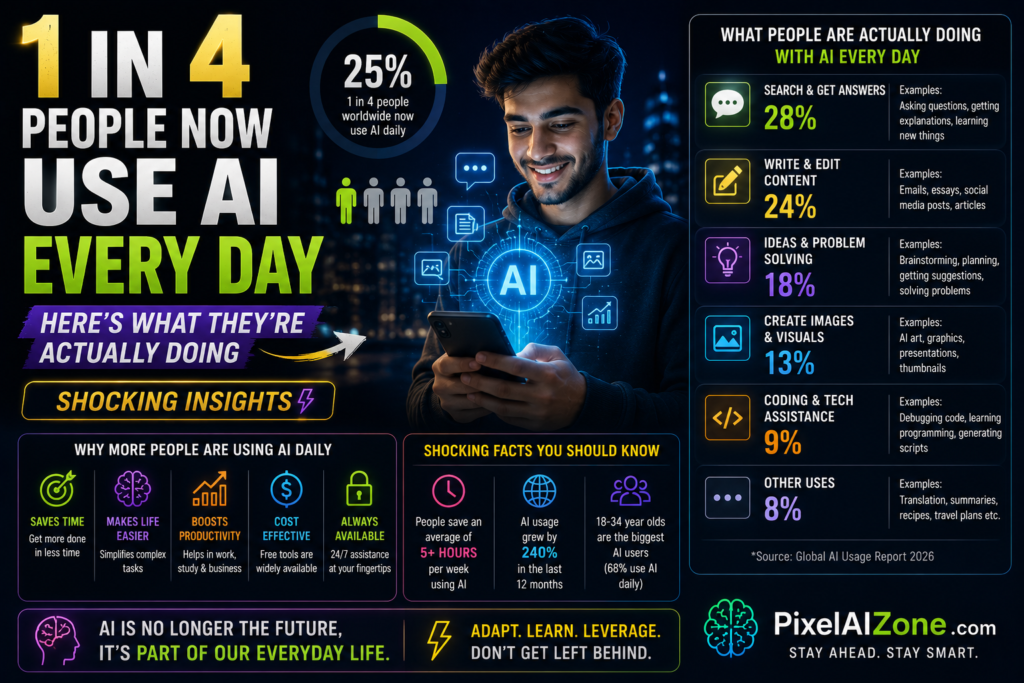
1 in 4 people now use AI every day, and the way they’re using it is changing fast.
Let me show you something.
In just one year, global AI adoption has risen from 62% to 74% across 44 countries. But here’s the more significant number: 39% of people now intentionally use AI “often” or “every day” — a 24-point jump that marks a shift from experimentation to habit .
One in four people now use AI daily. And the way they’re using it is changing fast.
According to a 2026 Harvard Business Review study analyzing 12,637 AI use cases, “therapy/companionship” is now the #1 use case — up from 5% to 11% of all AI interactions in just one year .
This guide explores what 1 in 4 people now use AI every day for — from emotional support to workplace productivity.
Table of Contents
- The Big Picture: AI Has Become Routine
- What People Are Actually Doing with AI
- The Emotional Shift: AI as Companion
- AI at Work: Productivity Gains and Hidden Risks
- The Generational Divide: Who’s Using AI and How
- The Trust Gap: Use Rising, Comfort Falling
- What This Means for You
- FAQ
1 in 4 People Now Use AI Every Day: The Big Picture
Understanding why 1 in 4 people now use AI every day starts with looking at the numbers.
AI has crossed a behavioural threshold. In many countries, it has quietly become a background utility — something people consult multiple times a day to search, think, plan, analyse, and create .
The global data confirms that 1 in 4 people now use AI every day across all age groups.
Key Numbers You Need to Know
The adoption gap: India remains the world’s most AI-engaged nation at 97%, while Pakistan (33%) and Ivory Coast (34%) remain the lowest-usage markets, underscoring widening global disparities .
What People Are Actually Doing with AI
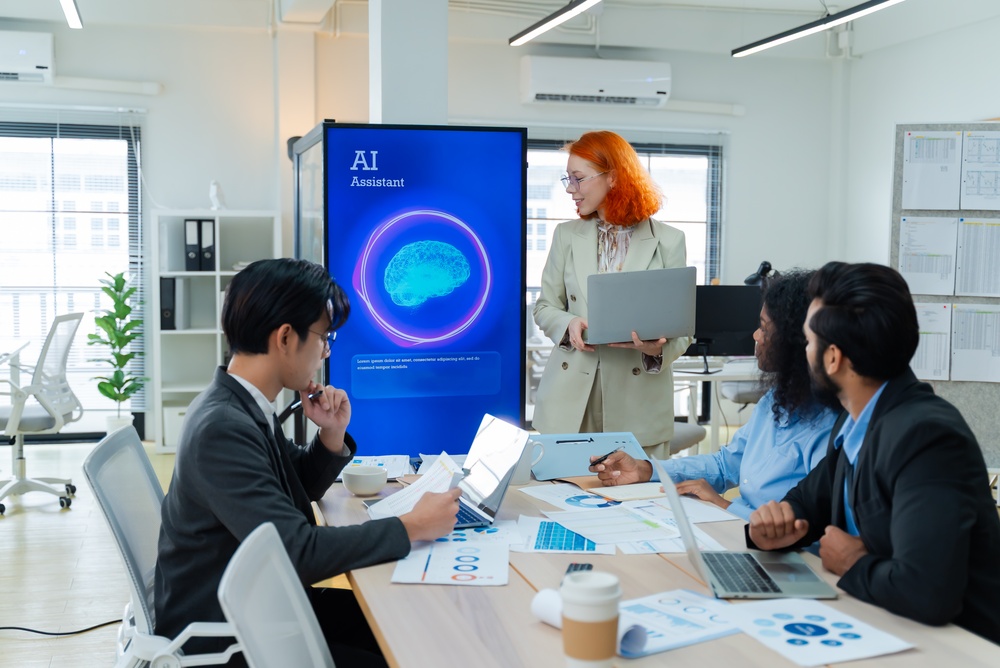
1 in 4 people now use AI every day for entertainment, education, and content creation.
At Home: Entertainment, Education, and Creation
Personal use of AI now outpaces professional use in most countries. Here’s how people are using AI at home:
Key trend: According to CCIA research, personal use exceeds work use of every major AI tool by a ~2:1 ratio or more .
At Work: Research, Data Analysis, and Automation
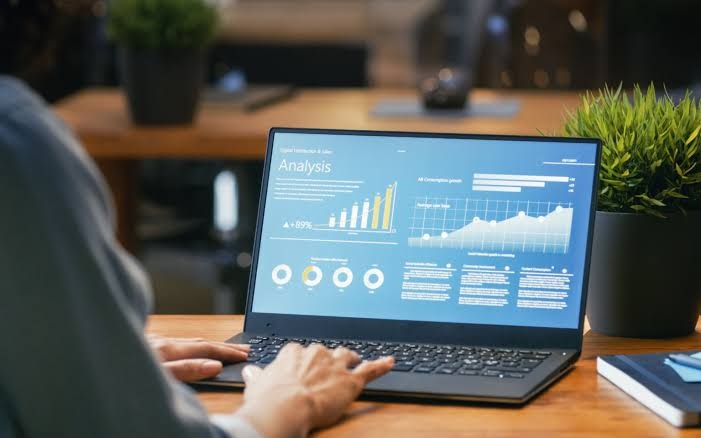
1 in 4 people now use AI every day at work for research and automation.
At work, professionals are using AI for more practical, task-oriented purposes:
| Use Case | Percentage | What It Means |
|---|---|---|
| Research and Data Analysis | 38% | Professionals using AI to analyse data and conduct research |
| Workflow Automation | 28% | Automating repetitive tasks and workflows |
What’s new in 2026: According to HBR’s study, “autonomous agentic operations” (AI acting independently) entered the top 10 use cases for the first time, though examples remain experimental and small-scale .
The productivity payoff: U.S. workers using generative AI report a 15% productivity improvement on average — translating to a nearly 6% productivity increase across the U.S. economy .
The Emotional Shift: AI as Companion
The emotional shift explains why 1 in 4 people now use AI every day for companionship.
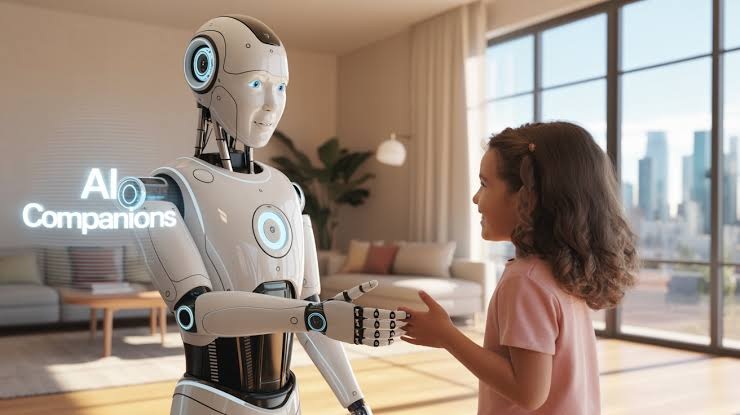
The #1 use case for AI in 2026 is not productivity or research — it’s therapy and companionship .
The Numbers That Matter
- 11% of all AI interactions are now for therapy/companionship (up from 5% in 2025) .
- Over 1,400 such interactions were recorded in the HBR study — and that’s from a dataset of 12,637 use cases .
How People Are Using AI for Emotional Support
People are using AI for:
- Relationship advice (#7 use case)
- Love lives (#17 use case)
- Reconciling personal disputes (#26 use case)
- Safe space to ask difficult questions (#32 use case)
- Boosting confidence (#43 use case)
What this looks like in practice:
“I’ve been using ChatGPT, who I’ve named Bubby, to console me.” — User quoted in HBR study
“I used to show it texts from my ex situationship to know the underlying meaning behind them.” — User quoted in HBR study
“I use AI all the time to evaluate an argument I’ve written and have the AI try to poke holes in it — I then assess if I’m missing something and go back to refine it myself. AI is a mirror — not a genie.” — User quoted in HBR study
Is This Healthy?
Dr. Hamilton Morrin, academic clinical fellow in neuropsychiatry at King’s College London, offers a nuanced perspective:
“Given long waiting lists and difficulty accessing mental health care and therapy in many countries, it’s perhaps not a surprise that increasing numbers [of people] are turning to generative AI for support with their emotional wellbeing.”
Yet he cautions that general purpose AI chatbots aren’t a substitute for trained mental health professionals. High-profile cases of “AI psychosis” and stories of AI romance over the past year have shown that therapeutic and emotional relationships with AI are high-stakes and can lead to heartbreak and even death .
AI at Work: Productivity Gains and Hidden Risks
The Positive Side: Productivity Gains Are Real
According to the CCIA 2025 survey, U.S. workers using generative AI report a 15% productivity improvement on average . Usage is broadening rapidly:
| Period | Workers Using AI at Work |
|---|---|
| March 2025 | 31% |
| July 2025 | 38% |
Daily use among workers: Increased from 21% to 31% in just four months .
The employment effect: AI coding capabilities may actually be increasing demand for software developers. Total U.S. software developer employment reached approximately 2.2 million in 2025, rising 8.5% year over year — a record high .
The Hidden Risk: “Thinkslop”
In at least a quarter of the top use cases this year, people are asking AI to do some portion of their thinking .
The HBR study identified a new term: “thinkslop” — the lazy, sloppy thinking that can be engendered by excessive use of AI .
How it happens:
- We lose track of our intentions: “Relying on AI to fully generate images or texts risks removing intention, authorship and personal perspective” .
- We outsource our thinking: “With excessive use of ChatGPT and all these AI tools, I realized I hadn’t been using my brain the same way… I was literally outsourcing my brain” .
- We stop writing: “My manager is using AI to do his review of me… they’ll both probably go into our AI tool to put it all together and output something that will read nicely and mean absolutely nothing” .
The solution: Don’t start with AI. Give yourself a good run at any thinking task first. Think about what parts of your workflow you should retain for yourself and which are better suited for AI .
The Generational Divide: Who’s Using AI and How
The generational divide shows how 1 in 4 people now use AI every day differently.

The generational gap in AI adoption is widening dramatically .
| Age Group | Weekly AI Use |
|---|---|
| 18-24 year olds | 42% |
| 65+ year olds | 7% |
The largest age difference measured was 24.3 percentage points in the United Kingdom, followed by Vietnam and Venezuela .
The UK Ofcom Report Finding
A UK Ofcom report found that 79% of 16-24 year olds use AI tools, and researchers describe a “pipeline from passive use to emotional dependence” .
What This Means
The next generation is actively driving adoption globally. They are pushing AI from novelty to necessity, from curiosity to expectation . But they also hold the most extreme fears — 56% believe AI could eventually destroy humanity.
The Trust Gap: Use Rising, Comfort Falling

Despite surging usage, public sentiment has grown more conflicted. Trust in AI’s capabilities has improved slightly, but comfort has declined from 45.0 to 42.5 .
The paradox: The world is becoming more confident in what AI can do, but less certain about what its growing influence means .
Misinformation Is the Top Global Concern

| Region | Concern About AI Misinformation |
|---|---|
| Europe | 77% |
| Americas | 73% |
Misinformation has emerged as the top global concern, as AI-generated content becomes harder to distinguish from reality .
What This Means for You
If You’re a Professional
- Use AI as a sparring partner, not a crutch. When used as an intellectual foil — to challenge assumptions, broaden horizons, consider counterarguments — AI can sharpen your thinking .
- Don’t outsource your brain. Give yourself a good run at any thinking task before turning to AI .
- The “job hugging” trend is real. 64% of workers are staying in current roles out of AI automation fears, despite burnout .
If You’re a Parent or Educator
- 79% of young people are using AI tools. The pipeline from passive use to emotional dependence is not theoretical — it’s happening .
- Education must adapt. Teach metacognitive training, critical evaluation, and responsible use .
If You’re a Business Leader
- The behavioural threshold has already been crossed. Your employees are using AI whether you’ve approved it or not .
- Trust and comfort are diverging. People trust AI accuracy but are uneasy about its broader role. Address both .
FAQ
Q: How many people use AI every day?
A: Globally, 39% of people use AI “often” or “every day,” a 24-point jump from 2025 . In the U.S., 17% of adults use AI daily .
Q: What are people actually using AI for?
A: At home: entertainment (39%), schoolwork (32%), and content creation (31%). At work: research and data analysis (38%) and workflow automation (28%) .
Q: Is AI being used for emotional support?
A: Yes. Therapy/companionship is the #1 use case in 2026, accounting for 11% of all AI interactions . People use AI for relationship advice, boosting confidence, and as a “safe space” to ask difficult questions.
Q: Does AI improve productivity?
A: Yes. U.S. workers using generative AI report a 15% productivity improvement on average, translating to a nearly 6% productivity increase across the U.S. economy .
Q: What is “thinkslop”?
A: A term from HBR’s 2026 study describing the lazy, sloppy thinking that can result from excessive AI use. It happens when people outsource their thinking to AI, stop writing, and develop a false sense of intellectual rigor .
Q: Why is trust in AI falling if adoption is rising?
A: People trust AI accuracy based on personal experience (it works), but they’re uneasy about its broader role in society — misinformation, job displacement, and what it means for truth and privacy .
Q: Is it true that 1 in 4 people now use AI every day?
A: Yes, global data confirms it.
Final Thoughts
The numbers are clear: AI has crossed the behavioural threshold. More people have adopted it, people are using it more often, for more tasks, and in more parts of their lives than ever before .
But this deepening reliance is accompanied by a new kind of unease — not about whether AI works, but about what its growing influence means for truth, trust, and society .
The question for 2026 is no longer whether people will use AI. They already are. The question now is how societies will adapt to a world where AI is both indispensable and increasingly scrutinised .
“As AI becomes woven into everyday behaviour, the challenge now is less about adoption and more about adaptation. The pace of change is accelerating, and societies will need to evolve just as quickly to ensure trust, transparency, and responsible use keep up.” — Richard Colwell, President of WIN
1 in 4 people now use AI every day — and this trend is only accelerating.
Related Posts on Pixelaizone
- “AI Has Crossed the Behavioural Threshold in 2026: Essential Guide to the Shocking Shift from Experimentation to Dependence”
- “The AI Trust Paradox 2026 Revealed : Why 74% of People Use AI Daily But Don’t Trust It (Powerful Insights)”
- “Pakistan’s Rs 283 Billion AI Programme 2026: A Game-Changing Opportunity for the Nation”
- Why Your AI Content Is Invisible: 9 Ways to Stand Out in 2026
- “The $1.3 Billion AI Ad Market: What It Means for Your Business (Game-Changing Trends)”
- “The Dark Side of AI in Pakistan: 5 Critical Threats We’re Ignoring”
- “Pakistan’s $1 Billion AI Investment 2026: What It Means for You (Game-Changing Opportunities)”
- “AI-Powered Finance in 2026: How Pakistani Businesses Are Transforming Banking (Revolutionary Changes)”
- “AI in Climate Change 2026: Powerful Strategies for Disaster Management in Pakistan”
- “AI Agents in 2026: The Ultimate Guide to How Autonomous Systems Are Changing Work”
- “AI in Pakistan Education 2026: A Complete Guide to the Future of Learning (Amazing Transformation)”
How are you using AI in your daily life? Drop a comment below!