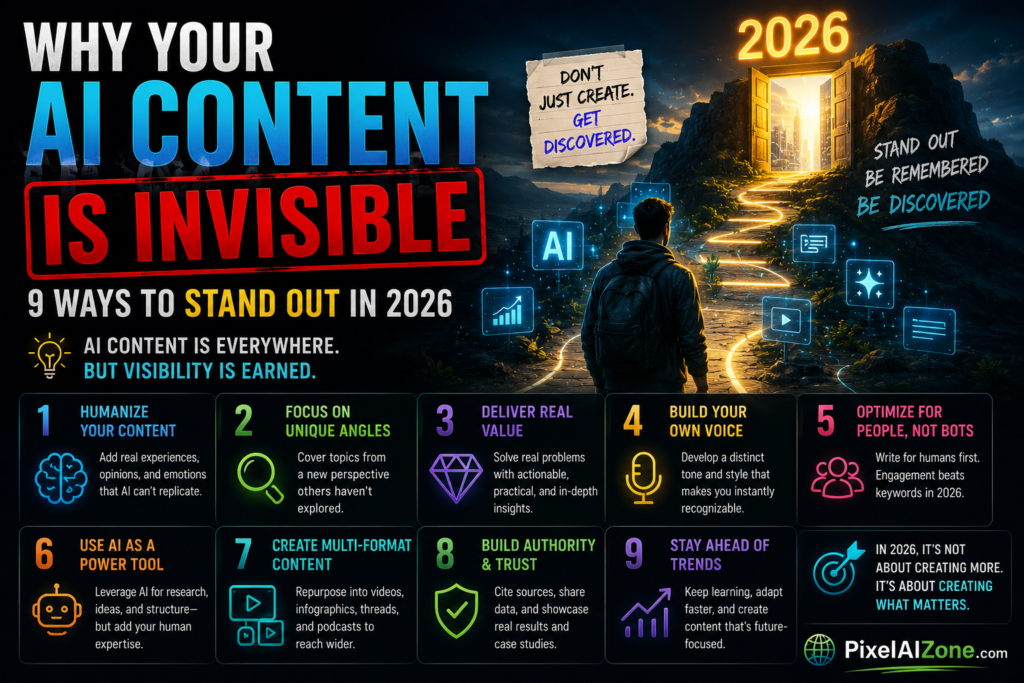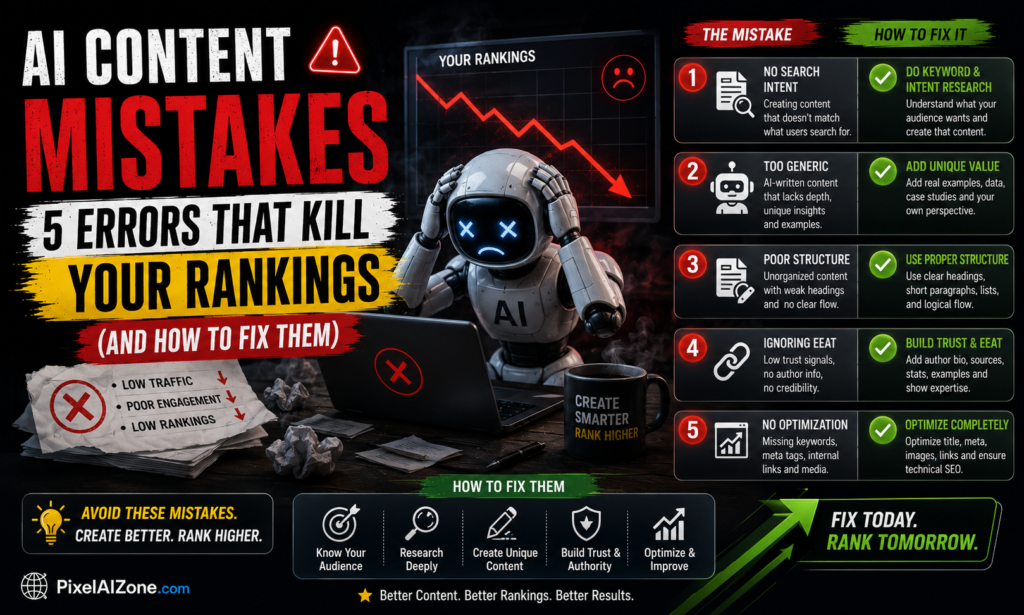
Stop making these AI content mistakes that are hurting your SEO. Here’s what actually works in 2026.
Let me be honest with you.
AI tools like ChatGPT can create content faster than ever. But publishing that content without proper oversight is a quick way to kill your rankings.
Here’s the reality: AI-generated pages reach the top 10 search results only 28% of the time, and the top 3 just 6% . The problem isn’t AI itself—it’s how people use it.
In this guide, I’ll show you the 5 most common AI content mistakes and exactly how to fix them.
Table of Contents
- Why Most AI Content Fails
- Mistake #1: Copy-Pasting Raw AI Output
- Mistake #2: Trusting AI Without Fact-Checking
- Mistake #3: Ignoring Your Brand Voice
- Mistake #4: Using Vague, Generic Prompts
- Mistake #5: Letting AI Replace Research
- How to Fix Your AI Workflow
- FAQ
AI content mistakes are the #1 reason why AI-generated pages fail to rank.
Why Most AI Content Fails

AI content often fails because it lacks the human touch that Google’s EEAT framework (Experience, Expertise, Authoritativeness, Trustworthiness) demands .
Common characteristics of AI content that fails:
- Formal, robotic tone with repetitive phrasing
- No personal experience or unique perspective
- Factual errors or made-up information
- Generic insights that don’t add value
Google doesn’t penalize content just because AI created it. What matters is whether it provides real value, demonstrates experience and expertise, and satisfies user intent .
One of the biggest AI content mistakes is copy-pasting raw output without editing.
Why AI Content Mistakes Happen (And Why They Matter)
Mistake 1: Copy-Pasting Raw AI Output
This is the biggest mistake content creators make. The temptation to copy and paste AI-generated text directly into your CMS is strong—but resist it .
Why it’s bad:
- Raw AI output sounds robotic and lacks rhythm
- It sounds exactly like your competitor’s AI content
- Google’s algorithms favor originality over volume
- Readers can tell when something feels off
How to fix it:
- Treat every AI output as a rough first draft
- Read it out loud—does it flow?
- Edit ruthlessly for clarity, personality, and engagement
- Add contractions, break up long sentences, and inject energy
Pro tip: The most successful teams treat AI as a collaborator, not a replacement .
This AI content mistake makes your content sound robotic and generic.
Mistake 2: Trusting AI Without Fact-Checking
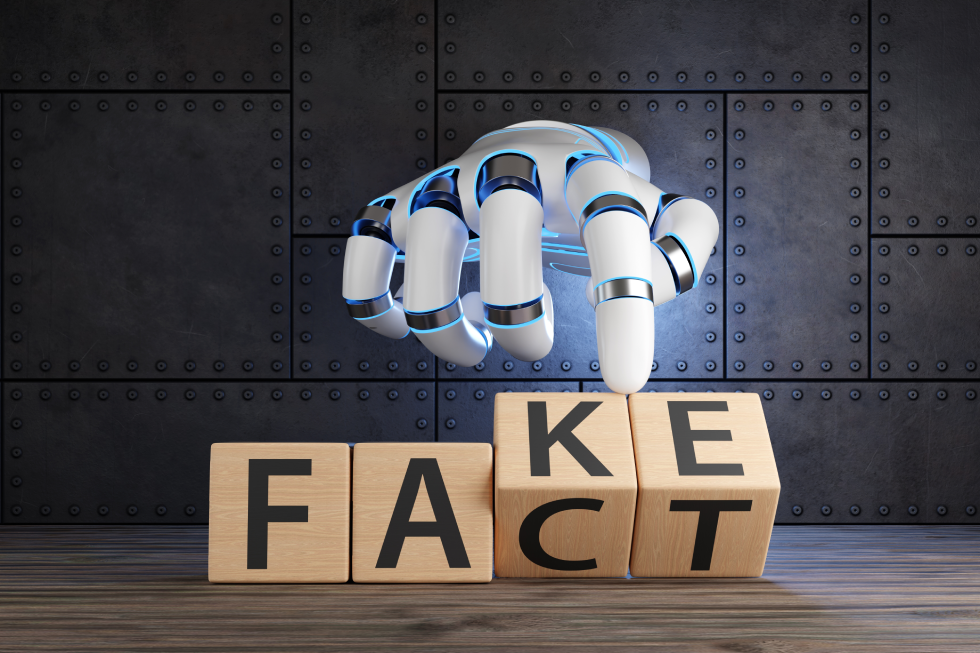
AI tools are confident—sometimes too confident. They can “hallucinate” and present fabricated statistics or incorrect information as absolute truth .
Why it’s bad:
- AI may invent statistics, quotes, or case studies
- Product claims and pricing references can be wrong
- Publishing false information destroys your credibility
How to fix it:
- Build fact-checking into your workflow as a non-negotiable step
- Verify every statistic with a trusted source
- Check dates, names, and technical details manually
- Use tools like Perplexity AI for source-backed research
The rule: Assume every AI-generated factual claim needs confirmation or a source .
Fact-checking is essential – another common AI content mistake.
Mistake 3: Ignoring Your Brand Voice

AI doesn’t understand your brand’s unique personality. It can mimic styles, but it can’t truly capture the quirks and nuances that make your brand memorable .
Why it’s bad:
- Your content starts sounding generic
- Generic content doesn’t convert
- Brand voice is your competitive advantage—don’t let AI water it down
How to fix it:
- Upload your brand guidelines and tone preferences into your AI tool
- After generation, ask yourself: “Does this sound like us?”
- Edit until your personality shines through
Pro tip: AI can help maintain consistency, but humans define the voice .
Ignoring your brand voice is a costly AI content mistake.
Mistake 4: Using Vague, Generic Prompts
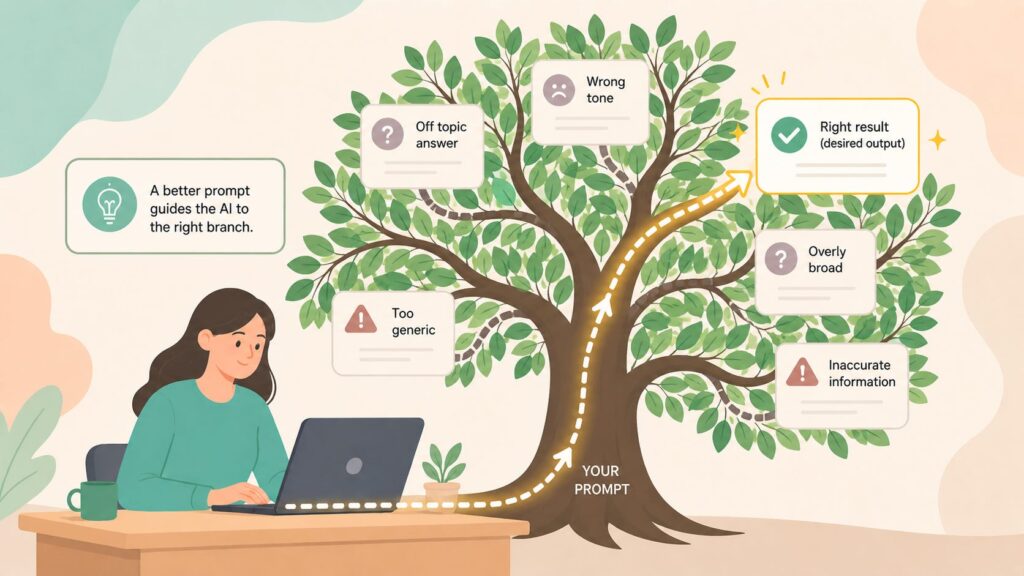
This is the most common mistake we see. People type something like “write a blog about digital marketing” and expect magic—but get bland, surface-level content instead .
Why it’s bad:
- Vague prompts lead to generic, off-brand content
- The output doesn’t address your specific audience
- It wastes your time and AI credits
How to fix it:
- Treat AI like you’re briefing a new copywriter
- Include specifics: target audience, tone, key points, goals
- List primary and secondary keywords
- Provide examples of content you like
The rule: Garbage in, garbage out. Gold in, gold out .
Using vague prompts is one of the most common AI content mistakes.
Mistake 5: Letting AI Replace Research

AI can accelerate research but not replace it. Asking AI for article ideas, then an outline, and finally a draft without any human input adds nothing unique to the conversation .
Why it’s bad:
- Your content becomes identical to every other site covering the topic
- You miss the nuance and depth that comes from real research
- AI models may not be able to read the pages you reference
How to fix it:
- Use AI to generate ideas, but do your own research
- Read and confirm sources manually
- Add your unique experience, case studies, and industry knowledge
Expert insight: Kieran Klassen, co-creator of Cora, said: “LLMs are very good at just following steps… What’s left for humans are the steps before and after—the planning, where you frame the problem, and review, where you determine whether the output feels right” .
How to Fix Your AI Workflow
Before (Mistakes):
text
Write prompt → Copy-paste → Publish → Low engagement
After (Correct):
text
Strategy → Research → AI Draft → Human Edit → Fact-Check → Publish → Monitor
Best practices for AI content success :
- Add human expertise and unique insights
- Include original research and case studies
- Demonstrate EEAT through author bios and citations
- Optimize for search intent, not just keywords
- Always review and refine before publishing
FAQ
Q: Does Google penalize AI-generated content?
A: No. Google doesn’t penalize content just because it’s AI-generated. What matters is whether it’s helpful, accurate, and demonstrates authority .
Q: How can I tell if AI content is helping my SEO?
A: Track engagement metrics like bounce rate, time on page, and organic click-through rate. If AI-generated pages perform worse, they’re not connecting with your audience .
Q: Should I use multiple AI tools?
A: Yes. No single AI tool does everything well. Use specialized tools for writing, SEO, and editing .
Q: Is the hybrid model (AI + Human) the best approach?
A: Yes. The best-performing content uses AI for research, outlines, and drafts, then humans refine tone, add insights, and ensure quality .
Q: What are the most common AI content mistakes?
A: Copy-pasting, no fact-checking, and ignoring brand voice.
Final Thoughts
AI tools aren’t the problem. How you use them is the problem.
Stop treating AI like a magical fix and start treating it like a tool that needs human guidance. The most successful creators will be those who learn to command AI with skill and integrity .
Remember: AI provides the clay—you sculpt it into art.
By avoiding these AI content mistakes, you can create content that actually ranks.
Related Posts on Pixelaizone
- AI in Pakistan 2026: How Artificial Intelligence is Transforming the Nation (Complete Guide)
- Best AI Tools for YouTube in Pakistan 2026 (Free & Paid)
- “7 Easy Ways to Make AI Voiceover Videos for YouTube & TikTok (Step-by-Step Guide 2026)”
- Best AI Tools for Students in 2026 (Save 10+ Hours Weekly)
- “7 Real Ways to Make Money Online in Pakistan with AI (Easy & Legal 2026)”
- “Viral AI Microdramas Pakistan: How to Create Amazing Food Stories for Instagram in 2026”
- Best AI Tools for Making Money Online in 2026 (Powerful & Viral Guide)
- ChatGPT vs Gemini in 2026 (Powerful AI Comparison Guide)
- Top 10 Powerful Work From Home Jobs for Students in 2026
- How to Start a Blog and Make Money in 2026 (Ultimate Beginner Guide)
- Ultimate Guide: Best AI Tools for Content Creators in 2026
- Ultimate Guide: Best Web Hosting for Beginners in 2026
- Ultimate Guide: Best Freelancing Skills to Learn in 2026 for Beginners
- Free AI Tools For Students In 2026
What AI content mistake have you made? Share your experience below!