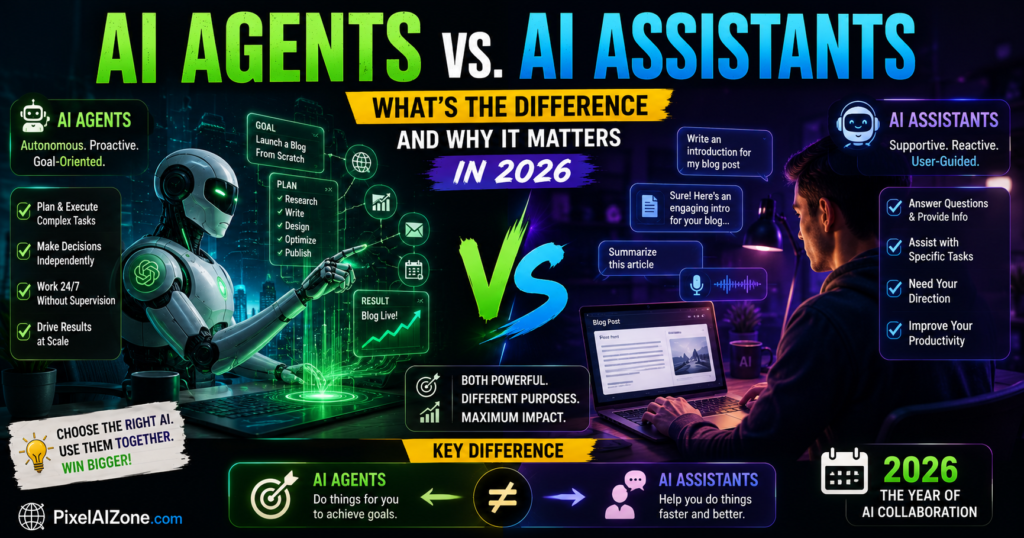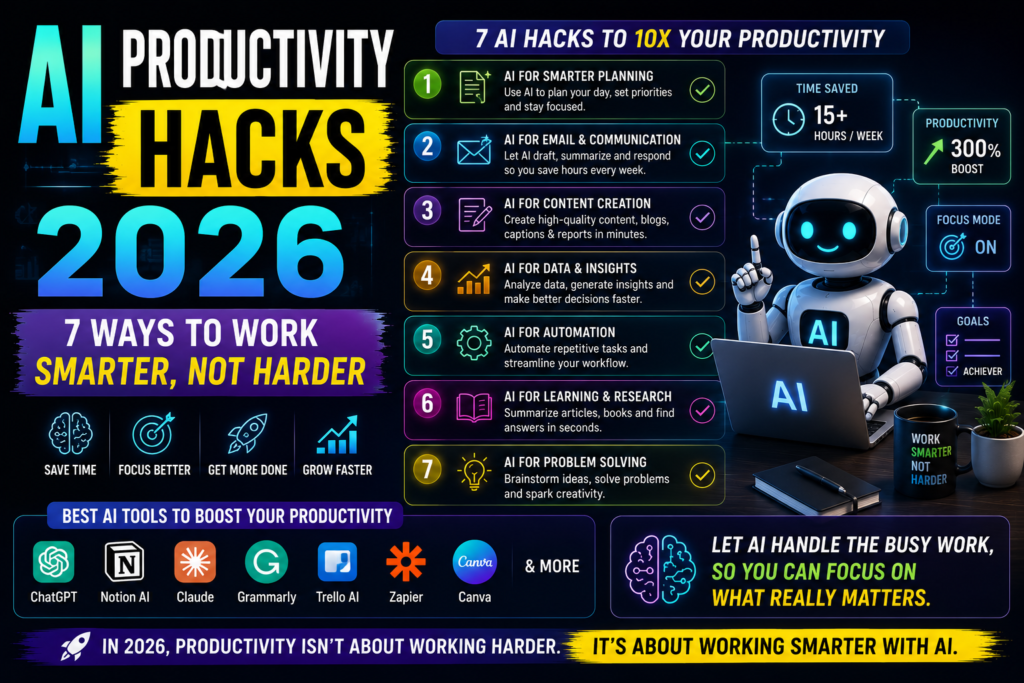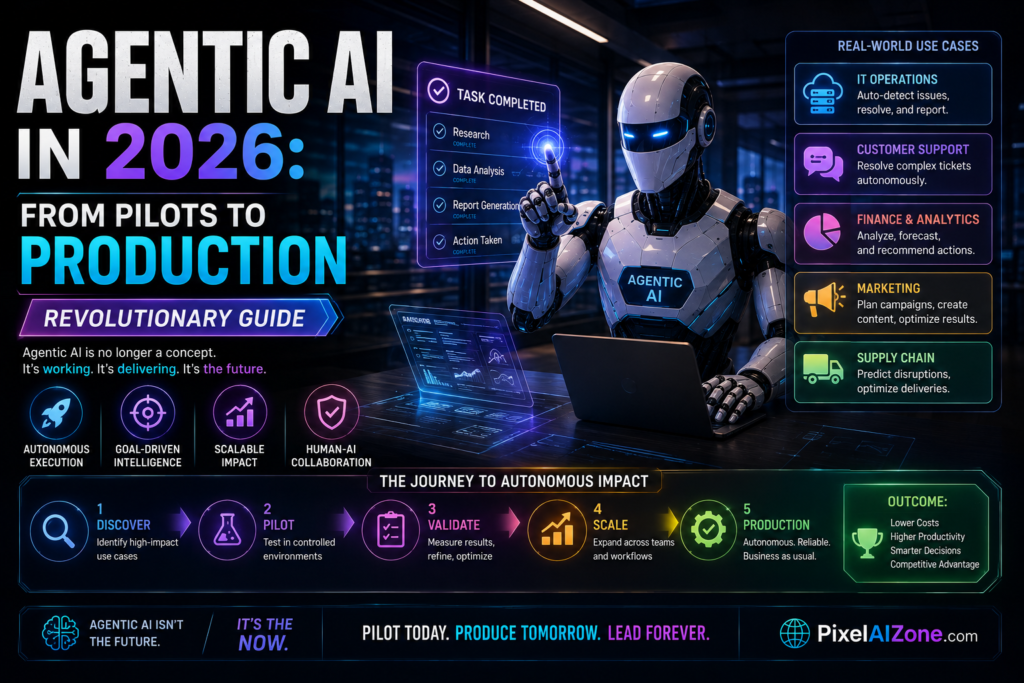
The shift from AI experimentation to enterprise-scale deployment has become the defining business challenge of 2026. Here’s what separates the pilots from production reality.
Let me show you something.
Every enterprise technology leader I speak with has launched at least one AI pilot. Some have launched many. Innovation teams have built prototypes. Data science groups have delivered proofs of concept. Executives have seen impressive demonstrations .
And yet, across the industry, a consistent picture emerges: there are many pilots. There are far fewer scaled systems. And there are very few truly autonomous workflows operating in production.
This is not a failure of ambition or talent. It is a shared industry challenge. AI experimentation has become common. AI execution remains rare. The gap between the two is where most organizations struggle .
Table of Contents
- The Pilot-to-Production Gap: What the Numbers Actually Show
- Why Agentic AI Raises the Stakes
- The Five Barriers to Production AI
- How to Build Production-Ready Agentic AI
- The Token Trap: Why Agent Orchestration Is Expensive
- What This Means for Your Business
- FAQ
The Pilot-to-Production Gap: What the Numbers Actually Show
Agentic AI pilots to production face significant governance and scaling challenges.

Analyst data from 2026 tells a consistent story, and it’s worth sitting with the gap rather than skipping to the exciting headline number.
On the optimistic side, Gartner projects that 40% of enterprise applications will embed task-specific AI agents by the end of 2026, up sharply from under 5% just a year earlier — an eightfold jump in a single year . McKinsey’s 2025 State of AI research found 88% of organizations already use AI in at least one business function .
Here’s the production reality underneath it: McKinsey’s own data shows only around 23% of organizations are actually scaling an agentic AI system anywhere in the enterprise, while roughly two-thirds remain in experimentation or pilot mode . IDC has found that the large majority of AI proofs-of-concept never reach wide-scale deployment .
According to the 2026 Gartner CIO and Technology Executive Survey, only 17% of organizations have deployed AI agents to date, yet more than 60% expect to do so within the next two years — the most aggressive adoption curve among all emerging technologies measured in the survey .
| Metric | Percentage |
|---|---|
| Organizations using AI in at least one business function | 88% |
| Organizations with AI agents in meaningful production | ~23% |
| Organizations still in experimentation/pilot mode | ~66% |
| Organizations that have deployed AI agents | 17% |
| Organizations expecting to deploy AI agents in 2 years | 60%+ |
The gap between “using AI agents” and “running agents in production at scale” is the single most important number for any enterprise leader to internalize in 2026. Broad usage is now cheap and common. Scaled, governed, revenue-impacting deployment remains rare .
Why Agentic AI Raises the Stakes
The shift from Agentic AI pilots to production requires a completely different approach.
The emergence of agentic AI makes this challenge more urgent. Traditional enterprise AI systems have largely been advisory. They generated forecasts, rankings, alerts, and recommendations. Humans remained responsible for decisions and execution.
Agentic AI changes that model . These systems are designed to:
- Reason about complex situations
- Make decisions
- Plan actions
- Execute workflows
- Learn from outcomes
They do not simply inform operations. They participate in them. This shift transforms AI from an analytical tool into an operational actor.
Once AI begins taking action, reliability becomes non-negotiable. Errors are no longer isolated. They propagate. They affect customers, margins, compliance, and brand reputation in real time .
The Five Barriers to Production AI
Organizations struggle with Agentic AI pilots to production due to fragmented data and disconnected workflows.
Across industries, the same barriers appear repeatedly. These are not isolated technical issues. They are systemic challenges .
1. Fragmented Data Foundations
Most enterprises operate with multiple versions of critical data. Product masters differ by system. Pricing data conflicts. Supplier records are duplicated. Hierarchies vary by department. Without a single, governed source of truth, AI systems receive inconsistent inputs. Teams compensate manually. AI cannot .
2. Lack of Governance
Many pilots operate without formal governance. No clear ownership. No defined approval processes. No audit trails. No consistent policies. This may be acceptable in a lab environment. It is unacceptable in production. When autonomous systems operate without governance, risk escalates quickly .
3. Disconnected Workflows
AI tools often live outside core systems. They generate outputs that must be manually transferred into operational platforms. Humans re-enter data. Approvals are handled through email. Exceptions are resolved offline. These handoffs break automation and introduce delays and errors .
4. Model-Centric Thinking
Many AI programs focus primarily on algorithms. Teams invest heavily in model performance while underinvesting in operational design. They optimize accuracy. They ignore integration. They underestimate change management. They overlook governance. Strong models are necessary. They are not sufficient .
5. Accumulating Technical Debt
Organizations assemble complex networks of tools and integrations. Custom pipelines. Point solutions. Brittle APIs. Manual workarounds. Each addition solves a short-term problem. Collectively, they create long-term fragility .
How to Build Production-Ready Agentic AI
Organizations that succeed in operationalizing agentic AI build environments that look very different from typical pilot setups .
Design the Orchestration Layer
The dirty secret of “agentic” is that the agent is rarely the hard part. The hard part is everything that has to happen around it for the work to land .
Five capabilities surface every time senior leaders design from a clean sheet :
- Coordinate agents, workflows, people, and policies as one system — Not as four. Treat an AI agent, a human reviewer, a long-running workflow, and a compliance check as different kinds of participant in the same process.
- Be observable end-to-end in real time — Every step of every process — every decision an agent makes, every handoff to a human, every system update — must be visible, traceable, and queryable from a single vantage point.
- Embed governance and policy as code — Compliance can’t be a bolt-on. “Does this transaction need a four-eye review?” — those are orchestration questions, not application questions.
- Be neutral about who does the work — The orchestration layer should not care which model, which vendor, which platform. It should care about the contract.
- Make the human a first-class participant — The right model is one in which humans and agents work together, not one where humans only appear when the agent fails.
The Tuning Loop
Creatio deploys agents in a “bounded scope with clear guardrails,” followed by an “explicit” tuning and validation phase .
Design-time tuning (before go-live): Performance is improved through prompt engineering, context wrapping, role definitions, workflow design, and grounding in data and documents.
Human-in-the-loop correction (during execution): Developers approve, edit, or resolve exceptions. In instances where humans have to intervene the most, users establish stronger rules, provide more context, and update workflow steps.
Ongoing optimization (after go-live): Developers continue to monitor exception rates and outcomes, then tune repeatedly as needed .
In simpler use cases, these practices have enabled agents to handle up to 80-90% of tasks on their own .
Treat Agents as Governed Identities
Forrester’s advice is direct: “Treat every agent as a governed identity.” Give it unique credentials, least privilege, full logging, and a named owner who manages its lifecycle — no unowned autonomy .
Scale in Stages
Start with bounded tasks behind approval gates and rollback paths. Widen autonomy only when the controls are proven . Enterprises that nail the conditions of trust and governance first are going to move a lot faster than everyone still stuck debating where to start .
The Token Trap: Why Agent Orchestration Is Expensive

Building multi-agent systems today feels painfully identical to the early, chaotic days of the microservices gold rush. The industry is drowning in orchestration frameworks, complex directed acyclic graphs, and elaborate state-machine diagrams .
The Problem with Infinite Context
The mainstream developer community has resorted to a brute-force band-aid: relying on the industry’s rapidly expanding context windows to keep every agent informed.
Using an infinite context window as a substitute for real state management is an absolute financial trap. In an enterprise environment operating at scale, passing massive, redundant context payloads back and forth across a network of agents causes token consumption to spiral quadratically .
Real-world impact: If 10 agents in a loop are forced to ingest and append a 100k-token corporate database slice just to execute a simple micro-task, you haven’t engineered an intelligent application — you’ve built a money pit for cloud compute API fees .
The Solution: Memory Fabric
We need to stop over-engineering the puppet master and start focusing on building a deterministic “memory fabric” that lives completely outside the prompt weights. Instead of a centralized coordinator explicitly commanding an agent to move to the next step, individual agents must become event-driven .
Agents sit back, monitor a shared global state, and autonomously activate the moment the data environment shifts into their specific domain of expertise. This completely erases the single point of failure inherent in manager-centric routing .
What This Means for Your Business

For Technology Leaders
The companies pulling ahead aren’t the ones with the most agents. They’re the ones laying the track the train will run on . Three moves matter most:
- Invest in orchestration before adding agents. Shared registries and hand-off patterns are critical for agents and conventional systems to work as one.
- Redesign the work, not just the tooling. Agents bolted onto human-paced legacy workflows produce task savings, not step-change value.
- Treat every agent as a governed identity. Give it unique credentials, least privilege, full logging, and a named owner.
For Business Leaders
The barrier to going further is authority, not accuracy. Model accuracy isn’t the hardest part of the problem anymore. It’s how much latitude to give an agent, how every action gets approved, and what happens when it’s wrong .
98% of enterprise leaders say there are specific conditions under which they would allow AI agents to autonomously execute changes in production. The question of whether enterprises will adopt agentic AI is settled. What’s left is architecture, not willingness .
For Risk and Compliance
Risk management is the real constraint. In Forrester’s Security Survey 2026, 49% of security decision-makers named agentic AI as a concern . These threats are new in kind, not just degree. Agents can impersonate each other and escalate privileges because nonhuman identity is still a mess.
You can’t govern that with quarterly reviews. You govern it with instrumentation that runs while the agent does, with identity and policy enforced as code rather than written down and hoped for .
FAQ
Q: What’s the difference between a pilot and production AI deployment?
A: Pilots operate in controlled environments with limited, curated datasets and minimal governance. Production systems must handle inconsistent data, enforce security and compliance, integrate with complex workflows, and operate reliably at scale .
Q: How many enterprises have actually scaled agentic AI?
A: Only around 23% of organizations are scaling agentic AI systems in production. Roughly two-thirds remain in experimentation or pilot mode .
Q: What’s the biggest barrier to scaling agentic AI?
A: The top barriers are security, privacy or compliance concerns (52%) and technical challenges to managing and monitoring agents at scale (51%), followed by shortage of skilled staff or training (44%) .
Q: Will AI agents replace human workers?
A: The data shows leaders expect a 50/50 human-AI collaboration for IT and routine customer-support applications, and a 60/40 human-AI collaboration for business applications. Human judgment remains essential for setting goals, defining boundaries, and ensuring accountability .
Q: What’s the token trap in agent orchestration?
A: Passing massive context payloads between agents in a loop causes token consumption to spiral quadratically. Using large context windows as a substitute for proper state management becomes an expensive financial trap at enterprise scale .
Q: How can I start moving from pilots to production?
A: Invest in orchestration before adding agents. Redesign the work, not just the tooling. Treat every agent as a governed identity. Scale in stages, starting with bounded tasks behind approval gates and rollback paths .
Final Thoughts
The gap between AI pilots and production is the defining enterprise challenge of 2026. The technology is here. Long-running agents are no longer theoretical — OpenAI, Cursor, and Anthropic have demonstrated agents operating for days or months .
But enterprise readiness hasn’t caught up. Governance gaps, ROI uncertainty, platform confusion, and the trust tax of auditability are all slowing progress .
What’s clear:
- Agentic AI has reached the Peak of Inflated Expectations on Gartner’s Hype Cycle
- Nearly half of organizations still struggle with security, privacy, and compliance concerns
- 98% of enterprise leaders would let AI agents run production under the right conditions
- The winners will be those who build governance in by design, not as a bolt-on afterthought
The question for 2026 is no longer whether to adopt agentic AI. It’s whether your organization can build the infrastructure to trust it at scale.
Related Posts on Pixelaizone
- Agentic AI vs Generative AI: The Ultimate Guide to What’s the Difference and Why 2026 Matters
- “The Rise of AI Agents: 5 Powerful Tools That Actually Do Work for You”
Where is your organization on the journey from pilots to production? Drop a comment below!