From autonomous vehicles to humanoid robots, Physical AI has become one of the largest technology markets in history. Here’s what every business leader needs to know.
Let me show you something.
In the first half of 2026 alone, venture investors poured **$47.4 billion** into Physical AI companies across 521 deals — nearly four times the $12 billion raised in the second half of 2025 .
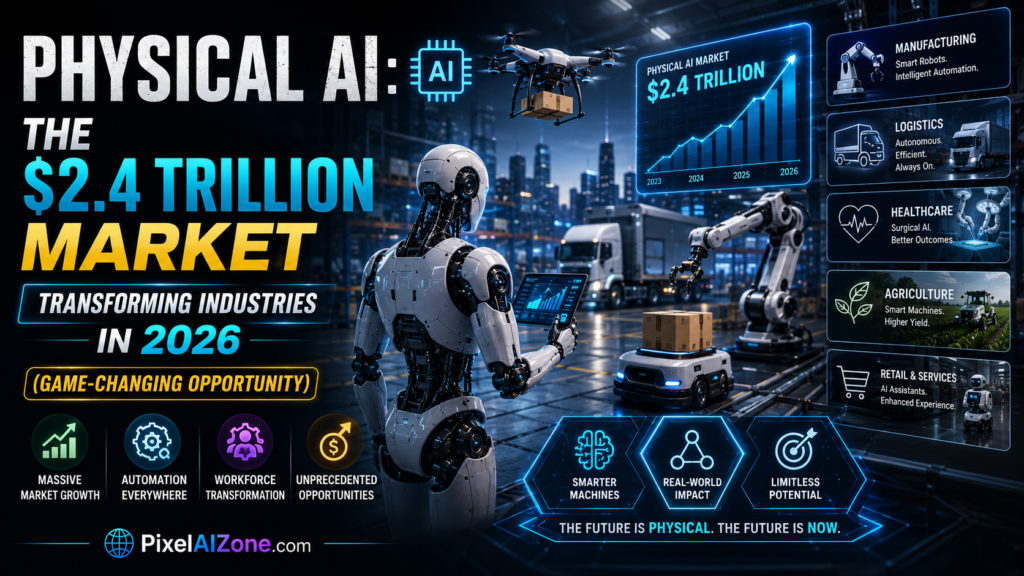
The global Physical AI market is projected to reach **$2.4 trillion** by 2032, with some estimates suggesting it could eventually exceed $6 trillion.
This isn’t the next wave of AI — it’s an entirely new paradigm.
Table of Contents
- What Makes Physical AI Different
- Why Physical AI Is Exploding in 2026
- How Big Is This Market?
- Key Industries Being Transformed
- How to Prepare Your Business
- Challenges and Risks
- FAQ
What Makes Physical AI Different
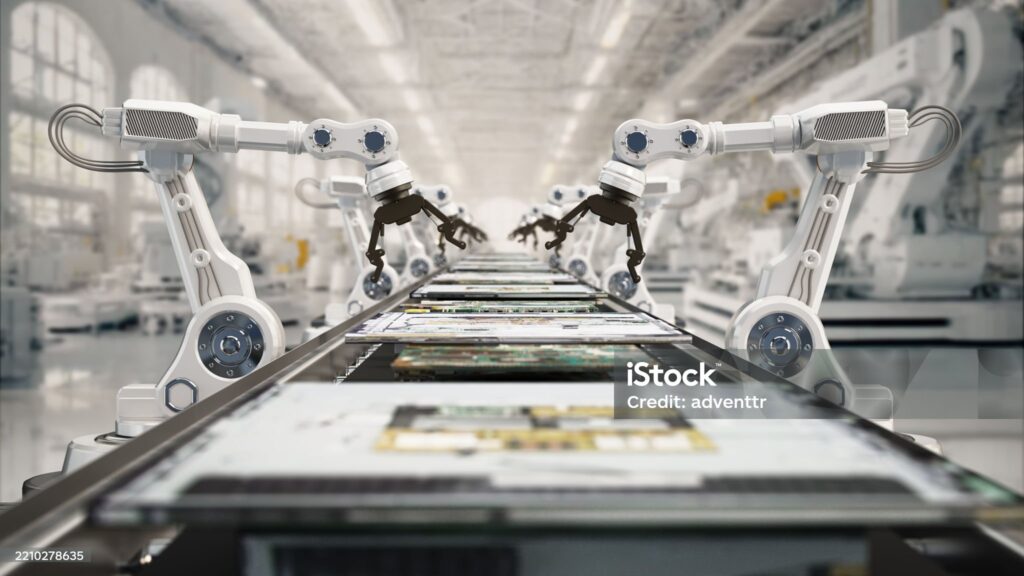
Physical AI integrates artificial intelligence with hardware systems — robots, autonomous vehicles, drones, industrial automation, and sensors. Unlike generative AI, which works in the digital world, Physical AI enables machines to perceive, reason, learn, and act in the physical environment .
The key difference:
| Digital AI (Generative AI) | Physical AI |
|---|---|
| Works in screens and servers | Works in the real world |
| Creates text, images, code | Controls robots, vehicles, machines |
| Generative | Operative |
| ChatGPT, Gemini | Waymo, Figure AI, Boston Dynamics |
Industry experts are optimistic about the commercialization prospects of this technology. As NVIDIA CEO Jensen Huang put it, Physical AI may be the first $50 trillion industry opportunity in tech history .
Why Physical AI Is Exploding in 2026
The “1995 Moment”
July 20, 2026, may go down as a turning point. On that single day, NVIDIA unveiled Cosmos 3 Edge (a world model for robots) and Google DeepMind showcased Gemini Robotics 2 . Industry observers called this Physical AI’s “1995 moment” — the inflection point where a technology becomes real.
The Software Saturation Problem
Generative AI has made software creation increasingly easy. Venture capitalists who once focused on software and internet services are now shifting capital to physical technologies — because software is becoming commoditized . As one investor put it, “Traditional software is no longer attractive because AI can easily replicate it.”
Hardware Costs Are Crashing
Mobile phones now have LIDAR scanners. Edge AI chips deliver dramatically more compute power at lower cost, making deployment more affordable than ever.
Real-World Data Bottlenecks
The biggest bottleneck today is access to real-world training data. Digital AI can scrape the internet, but this technology needs data from mines, farms, and factories. This scarcity is a competitive moat — companies that own physical operations have a distinct advantage.
How Big Is This Market?

Funding Surge (H1 2026):
- $47.4 billion raised across 521 deals — nearly 4x the second half of 2025
- 80% increase compared to the first half of 2025 ($26.4 billion)
- More invested in H1 2026 than the entire three-year period 2022-2024 combined ($41.9 billion)
What that means: H1 2026 alone surpassed the total investment of the previous three years combined.
Key Megadeals Driving the Surge:
| Company | Funding | Valuation |
|---|---|---|
| Waymo | $16B Series D | $126B |
| Anduril Industries | $5B | $61B |
| Shield AI | $2B Series G | $12.7B |
| Saronic | $1.75B Series D | $9.25B |
| SpaceX | $75B IPO | $1.77T |
| Figure AI | — | $39B |
| NEURA Robotics | $1.4B Series C | $7B |
Key Industries Being Transformed
1. Manufacturing and Industrial Automation
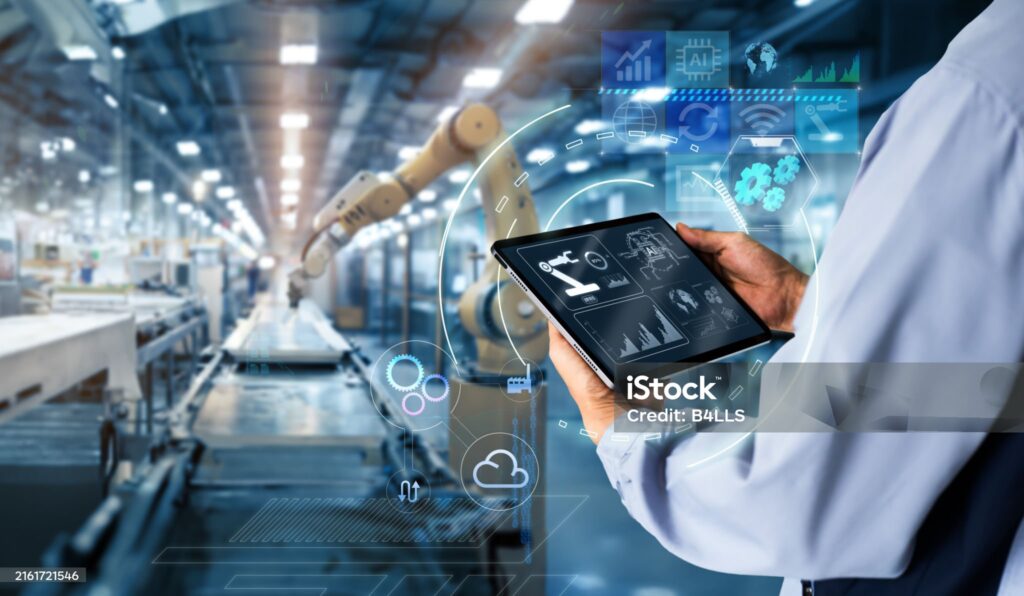
This technology is moving from demonstration to deployment at scale. According to Nvidia partner Ouster, “Physical AI is crossing the chasm from ‘demo to deployment,’ with mature pilots and prototypes actively moving into production.”
Solomon Technology reports AI vision business growth of 70% year-over-year, with applications already deployed in semiconductor, electronics manufacturing, quality inspection, and robotics guidance.
2. Autonomous Vehicles and Defense Tech
Waymo’s $16 billion round at a $126 billion valuation is the single largest deal in this space, accounting for nearly one-third of all H1 venture funding . In defense tech, companies like Anduril ($61B), Shield AI ($12.7B), and Saronic ($9.25B) are raising at valuations that double in less than a year.
The Pentagon’s May 2026 AI vendor list included major players like NVIDIA, AWS, Microsoft, Google, SpaceX, and OpenAI — all core Physical AI infrastructure players. This creates a permanent floor under the sector’s valuations that did not exist 12 months ago .
3. Logistics and Supply Chain
Autonomous mobile robots, warehouse automation, and fleet management systems are becoming standard. This technology enables real-time optimization, reducing delivery times and operational costs. As Jensen Huang stated: “Every industrial company will become a robotics company” .
4. Healthcare Robotics
Nvidia is pushing robotics into healthcare, with companies like CMR Surgical, Johnson & Johnson, and Medtronic using Nvidia’s platforms to train and validate robotic systems used in surgery and medical imaging.
5. Space and Extreme Environments
NASA’s Moon Base program will require autonomous systems for navigation, terrain mapping, robotic manipulation, and in-situ resource utilization over the next decade. None of these systems exist at the required performance level today. NASA’s procurement pipeline for them is beginning now .
How to Prepare Your Business
Start with High-Impact Use Cases
Don’t try to automate everything at once. Identify one area where Physical AI can deliver measurable ROI — logistics optimization, quality control, or labor augmentation.
Build a Digital Twin Strategy
Simulation platforms and digital twins allow AI systems to train in virtual environments before deployment. Organizations using digital twins reduce development costs and deployment risks significantly.
Invest in Data Infrastructure
This technology needs real-world data. If your business operates physical assets, you’re sitting on a valuable data asset.
Think “Hybrid Workforce”
This technology is not about replacing workers — it’s about moving people to higher-value tasks. The future workforce will combine humans and AI systems, with humans managing, supervising, and collaborating.
Challenges and Risks
| Challenge | Impact |
|---|---|
| High Upfront Investment | Significant capital required for hardware, sensors, and integration |
| Real-World Complexity | Systems fail in unpredictable environments; safety is paramount |
| Data Scarcity | No internet-scale dataset exists; real-world data is the bottleneck |
| Integration Costs | Moving from demo to deployment requires safety certification |
No regulatory framework exists today to certify a general-purpose Physical AI system for operation in unstructured environments alongside humans. The path from “impressive demonstration” to “insurable commercial deployment” is undefined .
FAQ
Q: What is Physical AI?
A: It integrates artificial intelligence with hardware systems — robots, autonomous vehicles, drones, industrial automation, and sensors — enabling machines to perceive, reason, and act in the physical world.
Q: How big is the market in 2026?
A: Venture funding alone hit $47.4 billion in H1 2026 . The global market is projected to reach $2.4 trillion by 2032.
Q: What’s driving growth?
A: Edge AI advancements, affordable sensors, hardware cost reduction, the shift from software to physical technologies, and the commoditization of software .
Q: Which industries are leading adoption?
A: Manufacturing, autonomous vehicles, defense, logistics, healthcare, and industrial automation.
Q: What’s the biggest bottleneck?
A: Access to real-world training data. Digital AI can scrape the internet, but this technology needs data from mines, farms, and factories — which are not publicly available .
Final Thoughts
2026 is the year Physical AI became real. The numbers are staggering: $47.4 billion in H1 funding, $2.4 trillion projected market size, and a fundamental shift in how venture capital is deployed .
What the data tells us:
- This is the next frontier after generative AI
- Funding has already exceeded the previous three years combined
- The industry is moving from “demo to deployment” at scale
- Real-world data is the competitive moat
As Jensen Huang declared: “Physical AI has arrived — every industrial company will become a robotics company” .
Related Posts on Pixelaizone
- The 2026 AI Shakeup: Why Midjourney Dropped to #46 and Video AI Is Taking Over Essential Guide
- OpenClaw, Microsoft Scout, and Gemini Spark: The AI Coworker Era 2026 Begins Essential Guide
- Agentic AI in 2026: From Chatbots to Digital Workers Revolutionary Shift
- “The Rise of AI Agents: 5 Powerful Tools That Actually Do Work for You”
What’s your take on Physical AI? Drop a comment below!