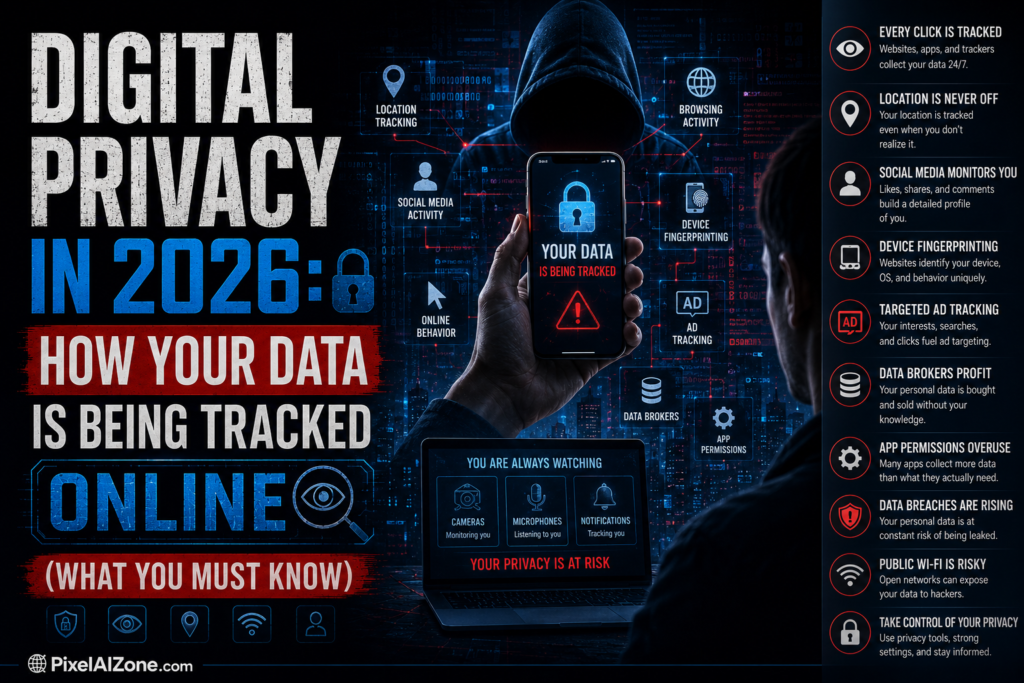
In today’s digital world, almost everything we do online leaves a trace. From social media activity to website visits, our personal data is constantly being collected, analyzed, and stored. In 2026, the issue of digital privacy in 2026 has become more important than ever before.
Many users are unaware of how much information is being tracked behind the scenes. Companies, advertisers, and even apps use advanced systems to collect user behavior data. This raises serious concerns about privacy, security, and personal freedom.
In this article, we will explore how data tracking works, why it matters, and how you can protect yourself online.
Digital Privacy In 2026
What Is Digital Privacy?

Digital privacy refers to the protection of your personal information when you use the internet.
This includes:
- browsing history
- location data
- search activity
- social media behavior
- device information
Whenever you use apps or websites, your data may be collected for various purposes.
How Your Data Is Being Tracked Online

Most websites and apps use tracking technologies such as cookies and analytics tools.
They collect data like:
- what pages you visit
- how long you stay
- what you click
- your preferences
Even free apps often generate revenue by collecting and selling user data to advertisers.
✔ Mozilla Privacy Guide
Why Companies Collect Your Data
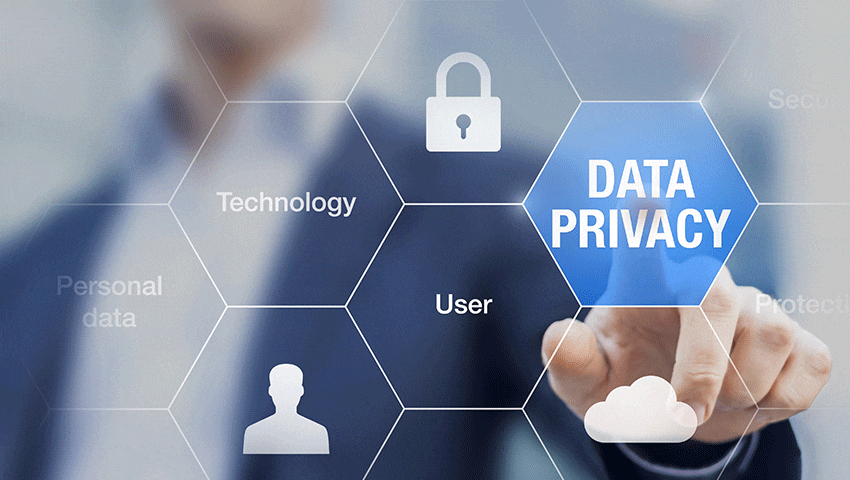
Companies do not always collect data for harmful reasons. In many cases, data is used to:
- improve user experience
- show personalized ads
- analyze trends
- improve products and services
However, excessive data collection can lead to privacy risks.
Digital Privacy Risks in 2026

1. Identity Tracking
Your online behavior can be used to create a digital profile of you.
2. Targeted Advertising
Ads are shown based on your personal interests and searches.
3. Data Breaches
Hacked databases can expose sensitive information.
4. Location Tracking
Many apps track your real-time location.
These risks make digital privacy in 2026 a serious concern for internet users.
✔ Google Safety / Privacy Info
Role of Big Tech Companies
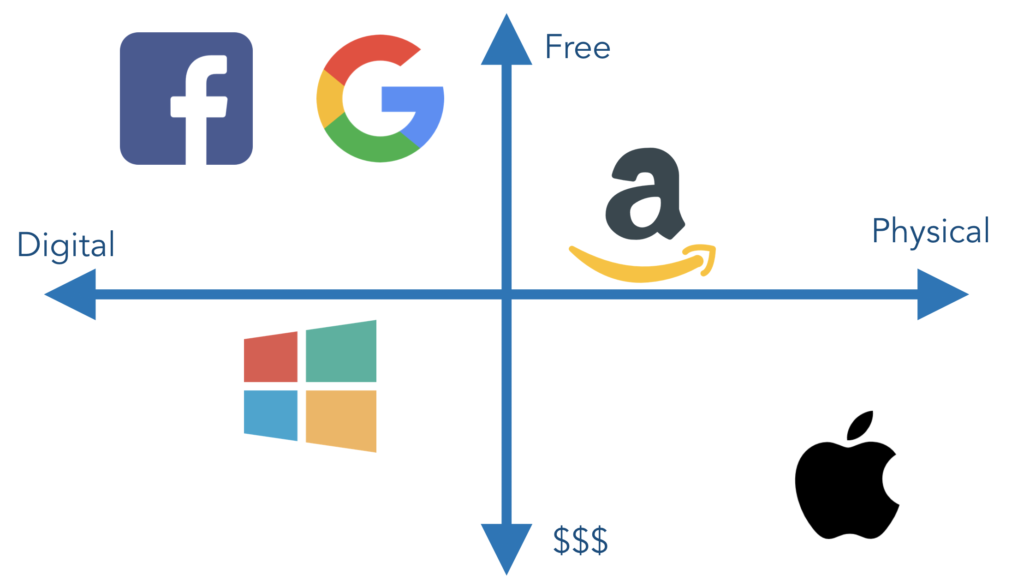
Large technology companies like Google and others use data to improve services.
While these companies provide useful tools, they also rely heavily on data collection systems to power advertising and analytics.
This creates a balance between convenience and privacy.
Is Your Data Safe Online?
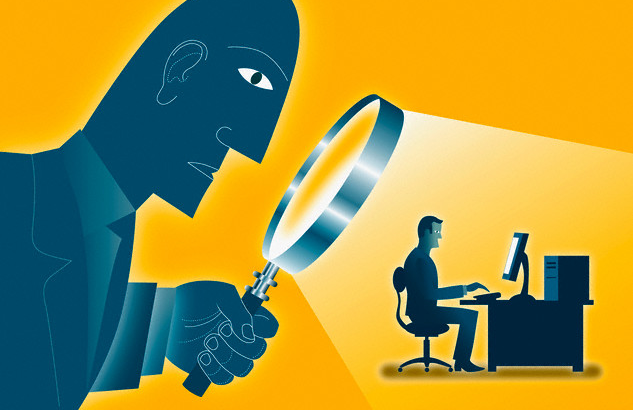
The truth is, no system is 100% secure.
However, risks depend on:
- the platform you use
- your security settings
- your online habits
Being careless online increases the chances of data exposure.
How You Can Protect Your Digital Privacy

You can improve your privacy by following simple steps:
1. Use Strong Passwords
Avoid weak or repeated passwords.
2. Limit App Permissions
Only allow necessary access to apps.
3. Use Private Browsing Tools
Some browsers offer enhanced privacy settings.
4. Avoid Suspicious Websites
Do not share personal data on unknown sites.
5. Review Privacy Settings
Regularly check social media privacy controls.
✔ Electronic Frontier Foundation
Why Digital Privacy Matters More in 2026

With the rise of AI and smart systems, data is becoming more valuable than ever.
Everything from shopping habits to online searches is analyzed to predict user behavior.
Experts warn that without proper awareness, users may lose control over their personal information.
For more information about internet safety, visit Mozilla Privacy Guide.
Future of Digital Privacy

In the future, we may see:
- stricter privacy laws
- better encryption systems
- AI-based security tools
- more transparent data policies
Governments and tech companies are slowly working toward improving user protection.
Conclusion
Digital privacy in 2026 is one of the most important topics in the modern internet era. While technology continues to advance, the amount of personal data being collected is also increasing.
Understanding how your data is tracked and taking simple precautions can help you stay safe online. Awareness is the first step toward protecting your digital identity.